











































The Impact of AI in the UAE Traffic System
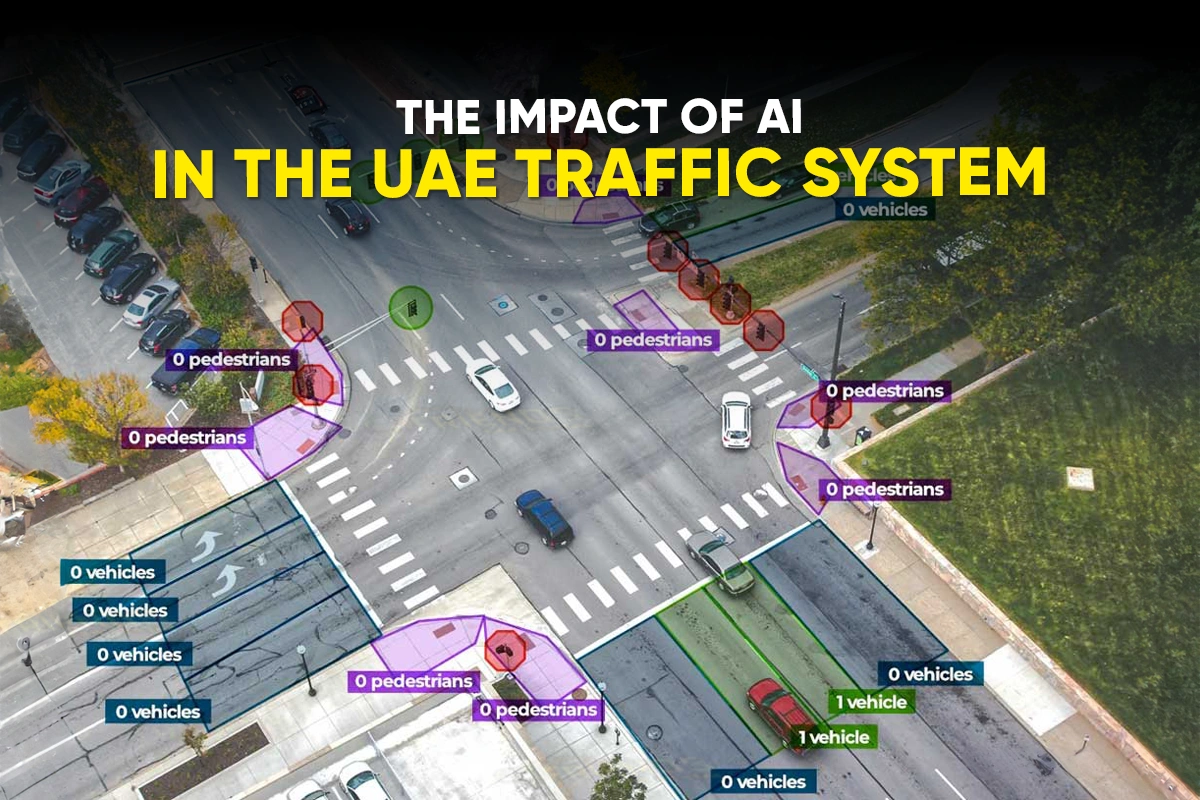
The days of fixed, predictable traffic management are over in the Emirates, with smart AI technologies taking center stage. This shift begs the question: What is the full impact of AI on the UAE's traffic system? Evidently, the country is aggressively integrating sophisticated Artificial Intelligence into its road networks, redefining urban mobility. This article explores the overall impact of the AIs in the UAE’s traffic management, from Dubai’s dynamic UTC-UX Fusion to Abu Dhabi’s smart ramp metering. We’ll learn about the good (faster, safer, and greener roads) and the bad (the privacy trade-offs and infrastructure costs) of this silent revolution.
Dynamic Traffic Flow Management
The most visible change for residents comes from adaptive traffic control systems. They treat the road network not as a series of isolated intersections but as a single, coordinated organism. The key players here are the UTC-UX Fusion system in Dubai and the Ramp Metering system in Abu Dhabi.
AI Technology in Focus
UTC-UX Fusion (Dubai RTA's Adaptive Traffic Signals).
Abu Dhabi's Ramp Metering.
How These AI Systems Work
The UTC-UX replaces the old timers that gave a green light for 60 seconds regardless of vehicle count. These adaptive traffic signals are transforming the intersections into fluid, real-time control points.
UTC-UX Fusion:
This AI acts as a central brain. It uses real-time sensor data, high-resolution cameras, and predictive analytics to assess vehicle density and queue lengths. In Dubai’s UTC-UX Fusion system, AI models simulate different timing scenarios using a digital twin of the road network. This allows the system to adjust signal timings every few seconds, prioritizing busy corridors and key junctions dynamically.
Ramp Metering:
Abu Dhabi’s current focus is on Ramp Metering at seven key entry points onto Sheikh Zayed bin Sultan Street. The smart signals only activate when congestion is detected, providing necessary intervention only when it is truly needed. This automated system regulates the flow of vehicles entering the main highway using traffic lights on the access ramps. It spaces out vehicle entry during congested periods, preventing bottlenecks on the main road.
Positive Impact on Efficiency
The results of these dynamic traffic management systems have been truly significant. They are directly addressing the core issues of congestion and efficiency in rapidly expanding urban centers.
Reduced Congestion:
Dubai’s RTA reports substantial traffic flow improvements with the UTC-UX Fusion system. Overall journey times have seen an improvement of 10% to 20% across major roads. Some heavily trafficked intersections achieve efficiency gains of up to 37%.
Smoother Commute:
Fewer stop-starts mean less time waiting at red lights, reduced driver stress, and a more predictable travel schedule. All these vital factors in enhancing the overall quality of the daily commute.
Green Impact:
The environmental benefits are substantial as well. The minimization of stop-start driving reduces idling time at intersections. This directly contributes to lower fuel consumption and a reduction in carbon emissions, aligning with the UAE's ambitious sustainability goals.
Negative Impact of Shifting Traffic
While dynamic flow systems are highly beneficial for the overall network, they are not without trade-offs.
Ramp Metering Trade-off:
The primary criticism revolves around the Ramp Metering Trade-off. When traffic is deliberately slowed down on an access ramp to benefit the main highway, it results in slightly increased waiting times on those smaller access roads.
Automated Rule Enforcement
While dynamic flow management keeps traffic moving, another silent revolution is happening in enforcement. High-resolution AI cameras are now the new traffic police, ensuring drivers adhere to the rules 24/7. This shift represents a move from intermittent human patrols to autonomous, data-driven policing, dramatically boosting road safety.
AI Technology in Focus
Dubai Police's Intelligent Traffic System (ITS).
How AI in ITS Technology Works
The Dubai Police’s ITS features sophisticated cameras mounted on major roads and intersections that continuously scan vehicle interiors and behaviors. Instead of relying on human officers to manually spot a violation, the AI instantly detects, records, and tags specific breaches.
For instance, the system can differentiate between a driver holding a phone to their ear and one holding a coffee cup. Upon detection, the system documents the violation with irrefutable evidence. It captures a series of high-resolution images or a short video clip, before automatically processing the fine.
Positive Impact on Efficiency
The most profound impact of automated enforcement is the direct correlation between its implementation and improved road safety statistics.
Massive Safety Improvement:
The strict, continuous enforcement acts as a powerful deterrent. Authorities have seen a direct link between ITS deployment and a significant reduction in traffic fatalities and severe injuries, proving the system's life-saving potential.
Objective Enforcement:
Fines are issued based purely on algorithmic assessment of undeniable evidence. This minimizes human error, eliminates bias, and leads to a more objective and consistent application of the law, building public trust in the enforcement process.
Resource Allocation:
By automating routine traffic enforcement, police officers are freed up from manual monitoring duties. This allows them to focus their valuable time and resources on higher-priority tasks, community engagement, and critical emergency response.
Negative Concerns and Challenges
This digital policing raises important public discussions regarding the balance between security and civil liberties.
Privacy Trade-offs:
The shift towards pervasive, constant surveillance, where high-resolution cameras continuously monitor vehicle interiors. This naturally raises public concerns about data privacy and the security of stored personal information. This requires robust regulatory frameworks and clear data retention policies.
The Unjust Fine:
Despite high accuracy, there is always the potential for false positives. Distinguishing a seatbelt from a scarf, or a handheld object from a mobile phone, can lead to a perceived unjust fine. This necessitates a transparent, easily accessible, and rapid fine appeals process to ensure fairness and maintain public confidence in the system's judgment.
Beyond Traffic: Socio-Economic Impacts
The impact of AI in traffic goes far beyond reducing the red light wait time. It directly translates into economic gain and improved quality of life. This fits perfectly with the UAE's long-term visions, like the Dubai Economic Agenda D33 and the Abu Dhabi Economic Vision 2030.
Operational Efficiency & Cost Reduction
AI-powered traffic systems have significantly optimized public services. The Roads and Transport Authority (RTA) has reported that its Smart Vehicle Network cut operational costs by 20% to 30% through predictive traffic control.
Furthermore, AI has been applied to maintenance, where the Automated Rail Inspection System (ARIIS) has reduced inspection time for the Dubai Metro by a crucial 70%, enhancing asset reliability and lowering maintenance expenditure.
Time Savings & Economic Productivity
Real-time AI traffic management has immediately improved commuter experience and productivity. Initial phase rollouts show intersection efficiency in key corridors improving by up to 37%, with overall citywide travel times reduced by 10% to 20%. This recovered time translates directly into billions of dirhams in added labor and leisure hours for residents, increasing national productivity.
Public Service Reliability & Digital Growth
AI and big data have profoundly impacted public transit reliability. The RTA's use of analytical tools has increased public bus punctuality by more than 50%, ensuring reliable service for hundreds of thousands of daily commuters.
This foundation of reliable infrastructure has also accelerated digital service uptake, with RTA’s digital revenues growing by 16% in the past year, confirming the economic viability of smart governance.
Final Thoughts
The UAE's strategic integration of AI into its traffic system signifies a profound commitment to the ideal cognitive city. The realized benefits: massive efficiency gains, reduced operating costs, and increased public service reliability, prove that AI directly translates into shorter commute times and a better quality of life.
However, long-term success hinges on continuous vigilance regarding privacy and maintaining public trust through clear policies and transparent appeal processes. By pioneering these sophisticated solutions, the UAE will set a global benchmark. AI is and will be the foundational reality that will push the UAE to achieve its future goals.
Leave a Reply
Your email address will not be published. Required fields are marked *
Car Rental in Dubai


AED 2500
DAY
AED 55000
MONTH
-
 SUV
SUV - 4 Doors
- 5 Seats
 SUV
SUV  4 Doors
  5 Seats
 - 1 Day Rental Available
- Deposit: Not Required
- Insurance Included

AED 5500
DAY
MONTH
- Sports
- 2 Doors
- 2 Seats
- 1 Day Rental Available
- Deposit: Not Required
- Insurance Included

AED 1200
DAY
MONTH
- SUV
- 4 Doors
- 5 Seats
- 1 Day Rental Available
- Deposit: Not Required
- Insurance Included

AED 1600
DAY
MONTH
- SUV
- 4 Doors
- 5 Seats
- 1 Day Rental Available
- Deposit: Not Required
- Insurance Included

AED 1500
DAY
MONTH
- SUV
- 4 Doors
- 5 Seats
- 1 Day Rental Available
- Deposit: Not Required
- Insurance Included