




























Most Common Bugatti Problems and Solutions
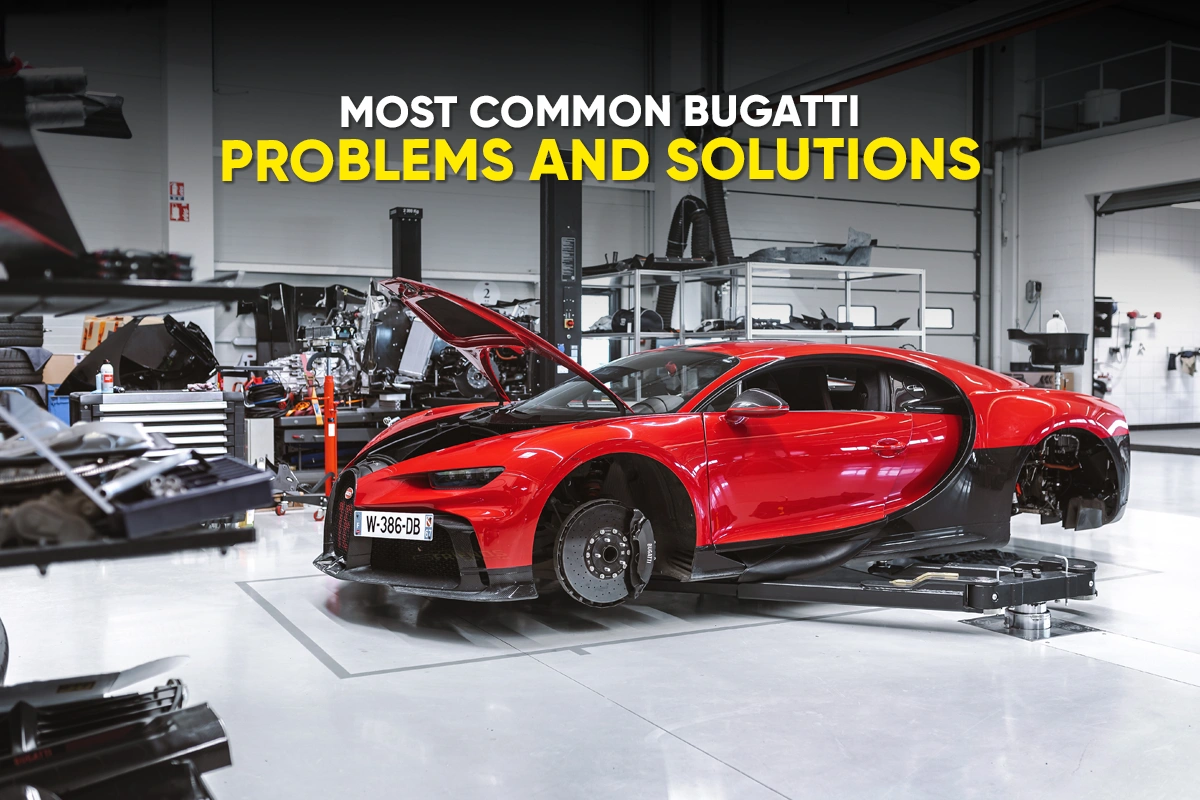
Wondering what the most complex Bugatti Veyron and Chiron problems are, and the expert solutions required to maintain your absolute masterpiece of engineering? This comprehensive guide details the 13 most frequent, high-stakes issues hypercar owners encounter, along with the precise, bespoke fixes. These in-detailed breakdowns will fully empower you to preserve the performance integrity and immense value of your cherished, multi-million-dirham vehicle with uncompromising confidence.
Bugatti stands not merely at the pinnacle of luxury, but as the relentless pursuit of the impossible. However, even this benchmark brand demands an unprecedented level of commitment and specialized care. You must be aware of the mandatory, model-specific service challenges to ensure seamless, top-tier performance on the high-speed avenues of the UAE.
Learn about these 13 Bugatti complexities to avoid unexpected setbacks, master the true cost of perfection, and ensure your hypercar remains a timeless example of French engineering excellence. Dive in and command the road.
Routine & High-Cost Maintenance
1. Tire Degradation and Wear
What Happens:
Your sophisticated hypercar relies on custom-engineered Michelin tires, designed to withstand speeds exceeding 400 km/h. Due to these extreme stress requirements, the rubber compounds are subject to time-based expiration, not just mileage. These tires, even if rarely driven, degrade over a period of 2 to 4 years due to chemical changes, repeated high-speed runs, and the intense solar and thermal load of the GCC environment. Bugatti mandates replacement on this strict schedule to prevent catastrophic failure, especially when driving at high temperatures on the Emirate Roads. Ignoring this service severely compromises the car's safety envelope.
Affected Models:
● Veyron, Chiron, Divo, and all special editions (All Models).
Symptoms:
● The primary symptom is reaching the mandatory replacement date (2–4 years since installation).
● Visible micro-cracks or hardening of the rubber on the sidewalls (often accelerated by the UAE's high ambient heat).
● Intermittent or persistent warning messages from the Tire Pressure Monitoring System (TPMS).
Common Causes:
● Time and Material Degradation: The rubber compounds naturally lose elasticity and structural integrity over time due to aging and constant exposure to high temperatures.
● Heat Cycles: Repeated heating and cooling from driving, necessary for the performance compound, which is exacerbated by high ambient summer temperatures in the UAE.
● Manufacturer Safety Mandate: The tires are certified only for a limited lifespan to guarantee safety at maximum speeds.
Solutions:
● The owner must strictly adhere to the mandatory 2–4 year replacement schedule.
● Replacement must be performed by a certified Bugatti service center, as the process requires specialized mounting equipment and precise wheel calibration.
● Always ensure the vehicle is stored in a climate-controlled environment when not in use to slow the aging process.
Estimated Repair Cost:
● Full Set of Veyron Tires: AED 110,000–AED 155,000+.
● Full Set of Chiron Tires: AED 155,000–AED 185,000+.
Related Article: Most Common Rolls Royce Problems and Solutions
2. Mandatory Fuel Tank Replacement
What Happens:
Unlike most cars, the Bugatti Chiron’s sophisticated carbon fiber fuel tank assembly is designated as a mandatory replacement item. The manufacturer specifies that this complex part must be replaced every four years, regardless of mileage or condition. This requirement is due to the stress limits and material lifespan of the fuel cell, which is integral to the chassis structure and crucial for safety at extreme speeds. Ignoring this service invalidates the car’s manufacturer compliance and can lead to structural compromise over time.
Affected Models:
● Chiron, Chiron Sport, Chiron Pur Sport, and other derived models (All Chiron-generation cars).
Symptoms:
● The primary symptom is the expiry of the four-year service interval, tracked rigorously by Bugatti.
● No mechanical symptoms are typically present unless the service is long overdue and leads to premature failure.
Common Causes:
● Composite Material Lifespan: The engineered carbon fiber and composite materials within the fuel cell have a defined structural life limit.
● Manufacturer Safety Protocol: A non-negotiable requirement by Bugatti to maintain the hypercar's certification and extreme safety standards.
● Zero-Tolerance for Failure: Due to the car's extreme performance profile, the manufacturer leaves zero risk tolerance for fuel system aging.
Solutions:
● The owner must schedule the replacement with a certified Bugatti specialist or factory service center when the four-year mark approaches.
● The procedure is complex, requiring significant disassembly of the rear chassis and fuel system lines.
● The old tank is safely removed and replaced with a brand-new factory unit.
Estimated Repair Cost:
● Fuel Tank Part Cost (Estimated): AED 75,000–AED 100,000+
● Labor and Installation (Highly Complex): AED 75,000–AED 130,000+
● Total Estimated Cost (Parts & Labor): AED 150,000–AED 230,000+
3. Oil System Extreme Complexity
What Happens:
A routine oil change on a Bugatti is one of the most mechanically demanding services in the automotive world. The W16 engine's dry-sump oil system and unique chassis design require the technician to remove the rear wheels, brake ducts, and up to 16 separate drain plugs to ensure all old oil is extracted. This is not a failure, but a design complexity that translates directly into extremely high labor time (often 25–30 hours) for a routine fluid service. The cost is a result of the necessary hours and the level of specialized Bugatti-certified technicians required in the UAE.
Affected Models:
● Veyron, Chiron (All Models).
Symptoms:
● A sudden, massive invoice for a routine service.
● Performance degradation if the service is skipped or non-specialized oil is used.
Common Causes:
● W16 Engine Design: The sheer size and nature of the 8.0L W16 engine and its complex dry-sump lubrication system.
● Chassis Integration: The oil system is deliberately integrated deep within the chassis, requiring extensive component removal to access all drain points.
● Specialized Tooling: The need for official factory-approved tools and diagnostics to properly perform the service and reset systems.
Solutions:
● Adherence to the annual (or mileage-based) service schedule is essential.
● The service must be performed exclusively by an accredited Bugatti specialist or master technician.
● Only factory-approved synthetic oil and filters are used, which are specially blended for W16 high-heat operation.
Estimated Repair Cost:
● Total Oil Change Service (Parts, Fluids, 25-30+ Hours Labor): AED 70,000–AED 95,000+
Related Article: Most Common Bentley Problems and Solutions
4. Brake System Wear
What Happens:
The immense stopping power required for the world's fastest cars means they use massive carbon-ceramic brake systems. These components, while durable, are subject to wear based on driving style. Hard braking, track usage, or even repeated aggressive driving on the Emirati highways can quickly erode the carbon-ceramic discs and specialized pads. When a system reaches its wear limit, the entire set of discs and pads must be replaced to maintain safe stopping distance and thermal capacity, resulting in one of the most expensive wear item replacements on the vehicle.
Affected Models:
● Veyron, Chiron (All Models).
Symptoms:
● A warning light indicating brake pad wear.
● High-pitched squealing or grinding during braking.
● Visible wear indicators on the brake pads or ceramic discs showing excessive thinning or surface scoring.
● Reduced braking performance or "fade" after intense use.
Common Causes:
● Aggressive Driving: Frequent high-speed deceleration causes massive heat build-up and accelerated material wear.
● High Vehicle Mass: The sheer weight of the Bugatti chassis puts enormous strain on the braking system.
● Ceramic Material Life: Carbon-ceramic materials have a finite lifespan before replacement is necessary.
Solutions:
● Routine inspection of the pads and discs at every service interval by a specialist.
● Replacement of pads and discs together when the discs reach minimum thickness.
● Calipers and fluid lines are inspected and brake fluid is flushed (which should be done every two years).
Estimated Repair Cost:
● Full Set of Replacement Carbon-Ceramic Discs (Parts Only): AED 250,000–AED 350,000+
● Complete Front or Rear Brake Service (Pads, Discs, Labor, Fluid): AED 180,000–AED 250,000+ (depending on number of corners serviced)
Engine & Cooling Failures
5. Cooling System Leaks & Failure
What Happens:
To manage the extreme heat generated by the 1,000+ horsepower W16 engine, Bugatti employs an incredibly complex cooling circuit involving up to 10 or more radiators, numerous pumps, and miles of specialized hoses and connections. The high operating temperatures, coupled with the intense ambient heat of the UAE summers, accelerate the degradation of rubber hoses, plastic connections, and seals. This leads to common coolant leaks, which, if ignored, can result in catastrophic engine overheating and failure. Leaks are often small at first but can rapidly escalate in the extreme climate.
Affected Models:
● Veyron, Chiron (All Models).
Symptoms:
● Visible pink or green coolant fluid puddles beneath the vehicle, often near the front end.
● Low coolant warning light illuminating on the dashboard.
● Rising engine temperature gauge, especially in heavy traffic or during sustained driving in high ambient temperatures.
● A sweet, distinct odor of coolant coming from the engine bay.
Common Causes:
● Component Overload: The sheer number of components (radiators, hoses, seals) increases the points of potential failure.
● Heat Degradation: The combination of engine heat and high ambient heat in the GCC causes plastic components and rubber hoses to become brittle and crack.
● Corrosion: Electrolysis or general corrosion within the aluminum cooling system components.
Solutions:
● Immediate professional leak detection using pressure testing and UV dye tests.
● Full disassembly of the necessary bodywork (often the front bumper/fenders) to gain access to the leak source.
● Replacement of failed hoses, radiator units, or auxiliary pumps with OEM parts.
Estimated Repair Cost:
● Minor Coolant Leak Fix (Hose/Seal): AED 10,000–AED 20,000
● Major Radiator Replacement (Parts & Labor): AED 35,000–AED 75,000+ (Depending on which of the 10+ radiators fails)
Related Article: Most Common McLaren Problems and Solutions
6. Turbocharger Issues
What Happens:
The W16 engine utilizes four turbochargers to achieve its phenomenal power output. These turbos operate at extremely high speeds and temperatures, relying heavily on a constant, clean supply of oil for lubrication and cooling. If the vehicle is not properly cooled down after a high-speed run, or if oil service is neglected, the turbocharger bearings or oil seals can fail. This leads to boost pressure loss, poor performance, and potentially oil being burned or leaked into the exhaust system, demanding costly replacement of the units.
Affected Models:
● Veyron, Chiron (All Models).
Symptoms:
● A noticeable loss of power or slower acceleration.
● A distinct whistling or whining sound coming from the engine bay during acceleration.
● Excessive blue-grey smoke from the exhaust (indicating oil burning).
● Check engine light (CEL) indicating low or fluctuating boost pressure.
Common Causes:
● Oil Contamination/Neglect: Dirty or low oil can starve the high-speed turbo bearings.
● Thermal Stress: Rapid temperature changes or inadequate cooling after high-load use.
● Seal Failure: Breakdown of the internal oil seals due to age or stress.
Solutions:
● Advanced diagnostic check to pinpoint the specific failed turbo unit (usually replaced in pairs).
● Complete turbocharger assembly replacement with new OEM units.
● Thorough inspection of oil feed lines and a full oil service must be performed alongside the repair.
Estimated Repair Cost:
● Single Turbo Replacement (Parts & Labor): AED 28,000–AED 50,000+
● Replacement of a Pair of Turbos (Recommended): AED 70,000–AED 120,000+
Electronics & Suspension Failures
7. Electrical and Sensor Faults
What Happens:
Modern Bugattis are rolling computers, relying on thousands of sensors and complex wiring harnesses to manage everything from engine timing to aerodynamic stability. Due to the high vibrations, extreme heat exposure, and sheer complexity, small electrical faults, sensor malfunctions, or wiring harness integrity issues are common. These issues rarely leave you stranded but frequently trigger frustrating, persistent warning lights and can put the car into a limited 'Limp Mode' until addressed. Diagnosing the precise fault can be highly time-consuming due to the integrated nature of the systems.
Affected Models:
● Veyron, Chiron (All Models).
Symptoms:
● Persistent, non-specific warning lights (e.g., Check Engine, ESP, Transmission Fault).
● Infotainment or display screen glitches.
● Random features momentarily malfunctioning.
● The car reverting to a low-power safe mode ('Limp Mode').
Common Causes:
● Vibration and Heat: The forces and thermal cycles of the engine cause sensitive electrical connections and harnesses to degrade.
● Sensor Overload: The sheer quantity of high-precision sensors makes them prone to minor failures.
● Software Bugs: Sometimes, the issue is not hardware, but a glitch requiring a factory software flash/update.
Solutions:
● Dealer-level computer diagnostics to pull and interpret Bugatti-specific fault codes.
● Tracing and repairing faulty wiring harnesses or connectors.
● Replacement of the specific sensor unit (e.g., oxygen sensor, manifold pressure sensor).
Estimated Repair Cost:
● Diagnostic Fee (Mandatory): AED 2,500–AED 5,000
● Minor Sensor Replacement (Parts & Labor): AED 7,000–AED 15,000+
● Complex Wiring Harness Repair/Replacement: AED 25,000–AED 60,000+
Related Article: Most Common Range Rover Problems and Solutions
8. Suspension/Ride Height System Failure
What Happens:
Bugatti hypercars utilize advanced, hydraulically actuated suspension systems to adjust ride height, downforce, and chassis stiffness dynamically. This complex system involves hydraulic pumps, actuators, control valves, and numerous sensors. Over time, the seals and components in the hydraulic system can leak or fail, often accelerated by the heat. This leads to the car being unable to switch ride modes or, in worst-case scenarios, the car becoming 'stuck' at an incorrect or compromised ride height, affecting high-speed stability and daily drivability.
Affected Models:
● Veyron, Chiron (All Models).
Symptoms:
● The car fails to raise or lower when commanded (stuck in a specific mode).
● A suspension fault message appears on the dash.
● Visible hydraulic fluid leaks around the suspension components or near the wheels.
● An uneven ride height at one or more corners of the vehicle.
Common Causes:
● Hydraulic Seal Degradation: High pressure and temperature degrade the seals in the actuators and pumps.
● Sensor Malfunction: Ride height sensors become inaccurate or fail entirely.
● Pump Failure: The high-pressure hydraulic pump for the system fails due to wear.
Solutions:
● Specialist diagnostics to pinpoint the faulty actuator, valve, or sensor.
● Repairing hydraulic leaks by replacing the necessary seals and fluids.
● Replacing the hydraulic actuator unit or pump and performing a full system calibration.
Estimated Repair Cost:
● Hydraulic Fluid Leak Repair/Seal Replacement: AED 15,000–AED 35,000
● Actuator/Pump Replacement (Parts & Labor): AED 45,000–AED 80,000+
● Full System Calibration: AED 8,000–AED 15,000
9. Electronic Stability Control (ESC) Malfunction
What Happens:
A specific recall was issued for the Chiron regarding the Electronic Stability Control (ESC) system. The software was found to contain a fault where the ESC system would not reliably return to its normal, fully operational default mode after the driver selected a high-performance "Handling Mode." If the system fails to restore stability functions properly, it significantly increases the risk of loss of control during aggressive driving, especially unexpected high-speed maneuvers.
Affected Models:
● Chiron (Specific 2017–2020 Models).
Symptoms:
● An ESC warning light remaining illuminated or flashing incorrectly after mode selection.
● An inability to return the car to standard (safer) driving modes.
● Diagnostic codes indicating an ESC system software error.
Common Causes:
● Software Bug: The issue was purely a programming error within the ESC control module.
● Mode Selection Conflict: A conflict arising from the transition between highly aggressive driving modes and the default stability settings.
Solutions:
● The required fix is a simple, mandatory software update and calibration performed by a Bugatti dealer or specialist.
● The factory ensures the latest software flash is applied to the ECU controlling the ESC system.
Estimated Repair Cost:
● Recall Service: Typically Free of Charge as it is a mandatory safety recall issued by the manufacturer.
Related Article: Most Common Mercedes-Benz Problems and Solutions
Recalls & Specific Defects
10. Transmission/Clutch Wear
What Happens:
The 7-speed dual-clutch transmission (DCT) handles the colossal torque of the W16 engine. While the transmission itself is highly robust, specific component faults or accelerated clutch wear can occur, often signaled by rough shifting, hesitation, or the gearbox entering a safety 'Limp Mode.' Due to the transmission's integration and bespoke nature, any repair requires significant engine-out labor and specialized tools, making even minor internal fixes extremely expensive. Ignoring these symptoms can lead to total gearbox failure.
Affected Models:
● Veyron, Chiron (Occasional faults on both).
Symptoms:
● Rough, slow, or delayed gear shifts.
● The transmission warning light illuminating.
● The gearbox defaulting to an emergency 'Limp Mode' with power restrictions.
● A mechanical grinding or clicking noise during shifting.
Common Causes:
● Clutch Plate Wear: Accelerated wear due to aggressive use or track driving.
● Mechatronics Failure: Faults in the highly complex hydraulic control unit (mechatronics) that governs shifting.
● Sensor Failure: Internal transmission sensors failing to report accurate data.
Solutions:
● Professional diagnostics to read and interpret transmission fault codes.
● Repairing or replacing the mechatronics unit or the entire clutch pack.
● In severe cases, the transmission may need to be removed (engine-out service) for a complete overhaul or replacement.
Estimated Repair Cost:
● Transmission Fluid Service (Routine): AED 35,000–AED 60,000+
● Clutch Pack Replacement (High Labor): AED 75,000–AED 140,000+
● Transmission Overhaul/Replacement: AED 250,000–AED 450,000+
11. Faulty Seat Welds
What Happens:
A voluntary recall was issued for early production Chiron models concerning potentially faulty welds in the front seat recliner brackets. If the welds were compromised, the seatback could shift suddenly and unexpectedly during driving. This sudden change in the driver’s seating position while operating the car at speed could increase the risk of an accident, making this a critical safety issue addressed by the factory. Bugatti went to extreme lengths, often using 'Flying Doctors,' to correct this issue worldwide.
Affected Models:
● Chiron (Specific early 2017–2018 Models).
Symptoms:
● The driver's or passenger's seatback shifts or moves unexpectedly.
● Visible cracking or failure near the seat recliner mechanism.
● The seat locking mechanism feels loose or insecure.
Common Causes:
● Manufacturing Defect: A specific batch of seat frames had defective or incomplete welds during the manufacturing process.
Solutions:
● Owners were contacted by Bugatti, often with personalized service.
● The affected cars were inspected, and if improper welds were found, the entire seat assembly was replaced with a new, certified unit.
● This was a mandatory safety recall.
Estimated Repair Cost:
● Recall Service: Typically Free of Charge as it is a mandatory safety recall issued by the manufacturer.
Related Article: Most Common Jeep Problems and Solutions
12. Jacking Plate Detachment
What Happens:
A recall was issued for specific Veyron models regarding aluminum plates fitted underneath the vehicle. These plates are used to support the car when it is lifted (jacked). Due to potential corrosion, these plates could loosen and potentially detach from the car while driving, creating a road hazard for other vehicles. The intense heat, occasional water exposure, and materials science meant the factory had to implement a specific permanent fixing to prevent detachment.
Affected Models:
● Veyron (Specific 2006–2013 Veyron, Grand Sport, and Super Sport Models).
Symptoms:
● A visible gap or looseness in the aluminum plates under the car.
● Potential road debris/scraping noises from the undercarriage.
● Detached plates found under the vehicle after parking.
Common Causes:
● Corrosion and Material Weakness: Corrosion around the mounting points allowed the plates to loosen over time.
● Vibration and Thermal Stress: The plates' fasteners were compromised by vehicle operation.
Solutions:
● Certified Bugatti technicians permanently riveted and sealed the aluminum underbody reference plates to prevent detachment.
● This was a proactive safety recall performed by the manufacturer.
Estimated Repair Cost:
● Recall Service: Typically Free of Charge as it is a mandatory safety recall issued by the manufacturer.
13. Positive Battery Cable/Alternator Corrosion
What Happens:
A recall was issued for early Veyron models concerning the positive battery cable connection to the alternator. This connection was found to be prone to corrosion, which could eventually lead to cable protection damage and cause the cable to overheat. In severe cases, this overheating posed a serious fire risk in the engine bay. The issue was a critical factory defect that necessitated a full replacement of the connection and protective sealing to prevent water ingress and resulting corrosion.
Affected Models:
● Veyron (Specific 2006–2008 Models).
Symptoms:
● A persistent battery or charging warning light.
● An unusual burning or electrical odor from the rear of the vehicle.
● Visible corrosion or melting near the battery or alternator connection points.
Common Causes:
● Water Ingress: Poor sealing allowed water/humidity to access the connection point.
● Corrosion: The resulting corrosion created electrical resistance, leading to overheating.
Solutions:
● Technicians replaced the affected alternator connection and cable.
● The connection points were sealed and rerouted to prevent any future water or humidity ingress.
● This was a critical safety recall.
Estimated Repair Cost:
● Recall Service: Typically Free of Charge as it is a mandatory safety recall issued by the manufacturer.
Related Article: Most Common Cadillac Problems and Solutions
Final Thoughts
You now possess a comprehensive understanding of the 13 critical and recurring Bugatti issues and solutions. This knowledge moves you beyond mere ownership, establishing you as the masterful steward of this unparalleled automotive marvel.
Actively apply these maintenance insights to mitigate risks associated with complex hydraulics, heat stress, and specialized component care. This diligence is crucial not only for preserving the multi-million-dirham value but also for guaranteeing the absolute performance, safety, and immense collector value of this Molsheim masterpiece across the Gulf.
Share your unique ownership journey and specialist insights below to assist other discerning Bugatti enthusiasts who appreciate the uncompromising dedication required to maintain this icon of speed.
Leave a Reply
Your email address will not be published. Required fields are marked *
Car Rental in Dubai


AED 2500
DAY
AED 55000
MONTH
-
 SUV
SUV - 4 Doors
- 5 Seats
 SUV
SUV  4 Doors
  5 Seats
 - 1 Day Rental Available
- Deposit: Not Required
- Insurance Included
AED 5500
DAY
MONTH
- Sports
- 2 Doors
- 2 Seats
- 1 Day Rental Available
- Deposit: Not Required
- Insurance Included
AED 1200
DAY
MONTH
- SUV
- 4 Doors
- 5 Seats
- 1 Day Rental Available
- Deposit: Not Required
- Insurance Included
AED 1600
DAY
MONTH
- SUV
- 4 Doors
- 5 Seats
- 1 Day Rental Available
- Deposit: Not Required
- Insurance Included

AED 1500
DAY
MONTH
- SUV
- 4 Doors
- 5 Seats
- 1 Day Rental Available
- Deposit: Not Required
- Insurance Included