































17 Most Common Peugeot Problems and Solutions
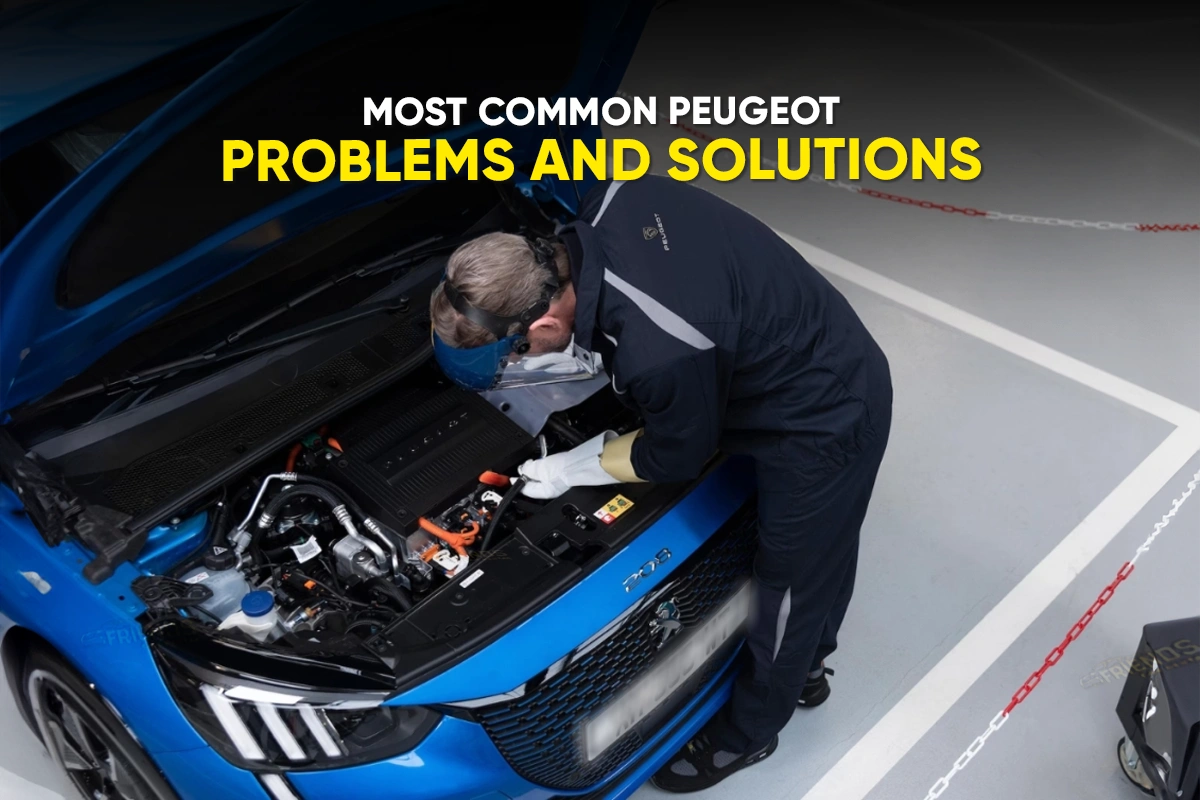
Looking for the most common Peugeot problems and solutions? This comprehensive guide details the 17 most frequent Peugeot car issues and their practical fixes. These in-depth breakdowns will empower you to maintain your Peugeot cars with confidence.
Peugeot is synonymous with sophisticated design, innovative engineering, and a rich automotive history. However, even this high-quality French brand faces certain issues that you should be aware of for successful ownership.
Learn about these 17 Peugeot problems to avoid unexpected setbacks on the road and ensure a seamless and confident driving experience. Dive in and stay ahead of the curve.
Engine & Fuel System Problems
1. Engine Misfire & Stalling
What Happens:
When the fuel mixture fails to ignite, you will experience an engine misfire, which usually causes a noticeable loss of power. This frustrating disruption prevents your engine from running smoothly, resulting in an uncomfortable rough idle. You will also notice definite hesitation during acceleration. Stalling occurs when the engine abruptly stops running completely, often because of an imbalanced air-fuel mixture. Both of these problems are connected to failures in essential fuel or ignition systems, and you must address them immediately.
Affected Models:
Peugeot 206, Peugeot 208, Peugeot 308
Symptoms:
Rough running and skipping or a noticeable engine vibration at idle.
Loss of power or hesitation during acceleration when you press the pedal.
The check engine light activates, often displaying misfire error codes.
Common Causes:
Faulty or worn-out spark plugs and ignition coils are the primary culprits.
Fuel delivery problems, such as clogged injectors or low fuel pressure.
Sensor failures, like a faulty Mass Air Flow (MAF) or Oxygen sensor.
Vacuum leaks from hoses or gaskets that disrupt the critical air-fuel ratio.
Solutions:
Replace all worn spark plugs and the corresponding faulty ignition coils.
Clean or replace clogged fuel injectors and verify the correct fuel system pressure.
Inspect all vacuum lines and gaskets to seal any identified leaks in the intake system.
Use a diagnostic tool to check for error codes and address any related sensor failures.
Estimated Repair Cost:
Ignition coil/plug replacement: ~AED 300–750.
Injector/Sensor Fix: ~AED 700–1,800.
Related Article: Most Common McLaren Problems and Solutions
2. Turbo Failure
What Happens:
Turbocharger failure results in a significant reduction of engine power, particularly during acceleration. This happens because the turbo is no longer forcing sufficient air into the engine's combustion chambers. You may also notice blue or black smoke coming from the exhaust pipe due to oil leakage into the system. Ignoring this issue will cause further internal engine damage, which will become much more expensive to repair later.
Affected Models:
Peugeot 308, Peugeot 407, models with the 1.6 HDi diesel engine
Symptoms:
A noticeable and significant loss of power, especially under acceleration or load.
Excessive blue or black smoke will be coming from the vehicle's exhaust.
A loud, distinctive whistling or whining sound from the engine bay is often audible.
The engine management light on your dashboard will illuminate, indicating a fault.
Common Causes:
Oil starvation or contamination will restrict the necessary lubrication flow.
Poor quality engine oil or extended oil change intervals can often be the problem.
Foreign objects entering the intake system may damage the high-speed turbine blades.
Worn internal turbo seals and damaged components cause internal leaks of oil.
Solutions:
Immediately replace the failed turbocharger with a new or a reconditioned unit.
Thoroughly inspect the oil feed lines for blockages and then clean them completely.
Change the engine oil and the oil filter using high-quality components and fluid.
Check the intercooler system for excessive oil build-up and clean it if needed.
Estimated Repair Cost:
Turbocharger replacement (reconditioned): ~AED 2,500–5,500.
New Turbocharger replacement: ~AED 4,000–8,000.
3. Timing Belt & Timing Chain Tensioner Issues
What Happens:
These timing components synchronize your engine's valves and pistons, which prevents them from colliding inside the engine. A worn belt can slip or a stretched chain can rattle, causing the critical engine timing to become completely incorrect. If either component fails, catastrophic damage to the engine will occur, often requiring a full, very expensive engine rebuild. This risk makes the timely replacement of these essential parts an extremely critical maintenance priority.
Affected Models:
Peugeot 208, Peugeot 308, Peugeot 508, 1.2 PureTech and 1.5 BlueHDi engines
Symptoms:
You may hear a ticking or a rattling noise coming from the engine block.
The engine may experience misfires, rough idling, or noticeable poor performance.
Complete failure of the engine to start or even turn over is a key sign.
On PureTech engines, debris can clog the oil strainer, causing low oil pressure.
Common Causes:
Premature degradation of the wet timing belt due to oil contamination.
Extended or missed oil change intervals cause the oil to lose its necessary quality.
The tensioner component fails to maintain the correct tension on the chain or belt.
In some diesel engines, the original timing chain was too thin and prone to early stretching.
Solutions:
Replace the timing belt or the chain kit, including all tensioners and pulleys.
Change the water pump at the same time since it is easily accessible during this job.
For PureTech engines, thoroughly clean the oil pick-up strainer for debris.
Adhere strictly to the manufacturer's specified replacement intervals for the timing belt.
Estimated Repair Cost:
Timing Belt Kit (with water pump): ~AED 2,500–5,000.
Timing Chain Kit and Tensioners: ~AED 3,000–5,000.
Related Article: Most Common Volkswagen Problems and Solutions
4. Oil & Fuel Leaks
What Happens:
Oil leaks occur when engine oil escapes past various seals, gaskets, or even the oil drain plug, which leads to a critical drop in your oil level. Fuel leaks involve a breach in the fuel lines, injectors, or tank, presenting an immediate safety and fire risk. You must address these issues quickly because low oil levels can quickly cause severe engine overheating and internal damage. Fuel leaks should never be ignored due to the significant danger they create.
Affected Models:
Peugeot 208, Peugeot 308, Peugeot 3008, 1.2 PureTech engine models
Symptoms:
Visible spots, drips, or actual puddles of oil or fuel underneath your parked vehicle.
A strong, distinct burning oil smell occurs when the leaking oil contacts hot exhaust components.
A noticeably decreasing oil level when checking the dipstick regularly is another sign.
In diesel models, a rising oil level may signal fuel contamination due to DPF issues.
Common Causes:
Worn, brittle, or damaged gaskets and seals, such as the valve cover or sump seal.
Damaged or loose oil drain plugs are frequently the primary source of oil leaks.
Fuel leaks are often caused by failed seals on injectors or degraded high-pressure fuel lines.
In some PureTech engines, poor oil quality can block the crankcase ventilation system.
Solutions:
The faulty gasket or seal must be identified and then replaced to stop the leak.
Tighten the oil drain plug to the manufacturer's specification or replace the copper washer.
For fuel issues, replace the leaking fuel lines or the failed injector seals right away.
If contamination is suspected, perform an immediate oil and filter change to protect your engine.
Estimated Repair Cost:
Minor Gasket/Seal Replacement: ~AED 550–1,200.
Fuel Line/Injector Seal Fix: ~AED 800–2,000.
5. Blocked DPF & Exhaust Problems
What Happens:
A Diesel Particulate Filter (DPF) traps the harmful soot produced by the engine, which must be burned off regularly through a process called regeneration. Blockages occur if the car is only used for very short journeys, which prevents the engine from reaching the necessary high temperatures. A blocked DPF severely restricts exhaust gas flow, causing a drop in engine power and increased pressure that can actually damage the turbocharger. The DPF warning light will usually be the first sign that there is a critical problem.
Affected Models:
Peugeot 208, Peugeot 308, Peugeot 3008 (All diesel engine models)
Symptoms:
The orange DPF warning light or the engine management light will illuminate on the dashboard.
A noticeable loss of engine power, or the car enters a restricted limp home safety mode.
Increased fuel consumption as the engine works harder to overcome the restriction.
Black or dark smoke coming from the exhaust pipe, especially under acceleration.
Common Causes:
Frequent short journeys prevent the engine from reaching the temperature needed for regeneration.
Failure of a component like the glow plug or the exhaust gas recirculation (EGR) valve.
Using an incorrect type of engine oil (non-low-SAPS oil) can cause excessive soot buildup.
Faulty sensors within the DPF system can interrupt the important regeneration process.
Solutions:
Drive the vehicle at highway speeds for 30–45 minutes to initiate passive regeneration.
A professional garage can perform a forced regeneration using specialized diagnostic equipment.
For more severe blockages, the DPF must be removed for ultrasonic or chemical cleaning.
If the filter is physically damaged beyond repair, a full replacement of the DPF unit is necessary.
Estimated Repair Cost:
DPF Forced Regeneration/Chemical Clean: ~AED 800–1,500.
DPF Replacement (New Unit): ~AED 4,000–8,000.
Related Article: Most Common Jeep Problems and Solutions
Electrical & Electronic Issues
6. General Electrical System Faults
What Happens:
These general electrical system faults relate to the vehicle's core wiring, battery, and overall charging infrastructure. These underlying faults can affect component performance and often manifest as a critical power drain or an inability to charge the main battery properly. A failure in the main power supply or the wiring harness can affect virtually every system in the vehicle. Electrical issues usually require extensive testing for proper and accurate diagnosis.
Affected Models:
Peugeot 207, Peugeot 208, Peugeot 308, Peugeot 3008 (Especially older model years)
Symptoms:
Your battery may drain prematurely, causing the vehicle to have difficulty starting.
Unrelated warning lights on the dashboard may illuminate seemingly without cause.
Headlights may appear dimmer than normal, or they may flicker intermittently.
Unexpected and erratic operation of interior components that do not have their own category.
Common Causes:
Failure of a main charging component, such as the battery voltage regulator or the alternator.
A faulty component causes a parasitic power drain while the vehicle is switched off.
Wiring harness degradation or corrosion can lead to intermittent short circuits.
Corrosion or loose connections on the battery terminals can disrupt the power flow.
Solutions:
A professional diagnostic scan must be performed to accurately isolate the fault source.
The battery and the alternator must be tested to ensure the charging system is fully healthy.
Locate and correct any parasitic power drain by disconnecting faulty components.
Clean or replace any corroded wiring or loose connections in the main electrical circuits.
Estimated Repair Cost:
Diagnostic Scan and Wiring Repair: ~AED 300–1,200.
Alternator Replacement: ~AED 1,500–3,500.
7. Central Locking & Handbrake Failure
What Happens:
You might experience problems with the electric door locks and the electronic parking brake system in your Peugeot. Sometimes, your central locking simply stops responding to the key fob, or one of your door actuators fails, which makes locking your vehicle completely impossible. When the electronic handbrake fails, the mechanism can get stuck, or it fails to properly engage or release, which is both extremely frustrating and creates a serious safety concern.
Affected Models:
Peugeot 207, Peugeot 2008, Peugeot 3008, Peugeot 5008 (Models equipped with an EPB)
Symptoms:
Your doors either do not lock when you press the button, or they unlock themselves without your input.
You find that one single door actuator has failed, preventing that door from locking with the central system.
The electronic handbrake will fail to release, or it struggles to hold your car securely in place.
You will see the explicit Parking Brake Fault warning message displayed on your dashboard.
Common Causes:
Failed solenoids or the actuator motor in a single door often cause central locking issues.
The electronic parking brake (EPB) motor or a simple faulty brake sensor is typically the cause.
You might find damage in the wiring loom where wires pass near the brake actuator or door hinges.
A low car battery can prevent the electronic parking brake system from engaging correctly.
Solutions:
You must accurately diagnose the failure using a professional, specialized diagnostic tool.
A technician needs to replace the faulty door lock actuator or the electronic parking brake motor.
Check the battery health and terminal connections to ensure the correct voltage is supplied.
For key fob issues, replace the key battery or have the entire unit successfully reprogrammed.
Estimated Repair Cost:
Door Lock Actuator Replacement: ~AED 750–1,800 per door.
Electronic Handbrake Motor/Actuator Replacement: ~AED 1,500–4,000.
Related Article: Most Common Cadillac Problems and Solutions
8. Infotainment System Failure
What Happens:
You might notice problems with your car's touchscreen and digital system, including the screen freezing or simply going completely black. This failure affects everything from your radio and navigation to vehicle settings and phone connectivity. Software bugs and glitches frequently cause these problems, which result in a very unresponsive or frustrating user experience. You lose access to vital vehicle functions and helpful connected services when the infotainment unit fails.
Affected Models:
Peugeot 208, Peugeot 2008, Peugeot 3008, Peugeot 5008
Symptoms:
The entire touchscreen becomes unresponsive, or the display intermittently freezes completely.
The screen goes entirely blank and refuses to turn on, or it begins rapidly flickering.
You experience consistent failure when trying to connect your phone through Bluetooth or Apple CarPlay.
The system is extremely slow to boot up, or the unit repeatedly restarts itself without warning.
Common Causes:
Corrupted software or old operating system bugs cause the general glitches.
A faulty internal component within the main unit itself often causes these severe failures.
A loose or damaged electrical connector supplying power to the display or the head unit.
Sometimes, a simple blown fuse specifically dedicated to the screen system will be the problem.
Solutions:
You should perform a soft reset by holding down the power button for approximately ten seconds.
A technician must update the system software to the most current version available from the manufacturer.
Check the fuses and wiring to the unit for a simple electrical fault before pursuing component repair.
If a physical component has failed, you will need to replace the entire head unit or the screen assembly.
Estimated Repair Cost:
Software Reset/Update: ~AED 300–600.
Head Unit Replacement (Hardware): ~AED 3,500–7,000.
9. Indicator Stalk Failure
What Happens:
Indicator stalk failure is a very common issue on many Peugeot models, and you will quickly notice it because your signals stop working correctly. This multi-function stalk, which often also controls your headlights and high beams, relies on internal electrical contacts. Over time, these contacts wear down, causing the indicator to fail intermittently, or they can stop self-cancelling after you complete a turn. Since your indicators are a critical safety feature, you must get this fixed promptly.
Affected Models:
Peugeot 107, Peugeot 206, Peugeot 207, Peugeot 307, Peugeot 308
Symptoms:
Your turn signal fails to engage at all, or it only works if you manually hold the stalk in place.
The indicator stops automatically cancelling itself after you successfully complete a turn.
You notice other functions on the same stalk, like your headlights, are also suddenly malfunctioning.
The stalk feels very loose or floppy when you try to move it up or down to signal a turn.
Common Causes:
Physical wear and tear on the electrical contacts inside the main stalk unit.
Wear in the self-cancelling mechanism found inside the steering column switch assembly.
The indicator stalk is one single unit that often includes the entire steering column switch (COM 2000).
Corrosion or broken wires within the multi-connector plug that connects the stalk to the wiring loom.
Solutions:
A qualified mechanic will first diagnose the fault to confirm it lives within the stalk itself.
They must disconnect the battery before working on the steering column, due to the nearby airbag.
The failed unit must be fully replaced; technicians usually cannot repair the internal parts.
Always ensure you replace the stalk with the exact correct part number for your specific vehicle.
Estimated Repair Cost:
Indicator Stalk Replacement: ~AED 800–2,500 (Cost varies significantly based on your model's part).
Related Article: Most Common Kia Problems and Solutions
Transmission & Drivetrain Faults
10. Gearbox Issues
What Happens:
You might face problems with your Peugeot's transmission, which includes both manual and automatic gearboxes. A common complaint involves the transmission refusing to shift smoothly or your car hesitating when you accelerate. For automatic cars, you could feel erratic or jerky shifting, while manual drivers struggle to engage a specific gear. Transmission fluid leaks and low levels can cause the internal parts to overheat, leading to expensive component failure if you do not address the issue.
Affected Models:
Peugeot 208, Peugeot 308, Peugeot 3008, Peugeot 5008 (Especially models with EGC/ETG semi-automatic boxes)
Symptoms:
You hear a strange grinding, whining, or clicking noise when the car is running in neutral or when you change gears.
Your automatic transmission unexpectedly slips out of a gear, or you feel significant hesitation while shifting.
You see the Gearbox Fault: Repair Needed message or a transmission warning light suddenly appear.
You may smell a distinct burning odour, which is often a sign of overheated transmission fluid.
Common Causes:
Low or dirty transmission fluid, which leads to overheating and excessive wear on the internal parts.
Failure of the automatic gearbox control unit, known as the mechatronics unit in some models.
Worn or damaged synchronizers cause grinding and make engaging gears extremely difficult.
You could also have a faulty sensor that sends incorrect information to the transmission's computer.
Solutions:
You should immediately check the transmission fluid level and look carefully for any obvious external leaks.
A technician needs to use specialized diagnostic equipment to check for electronic control unit faults.
They might perform a simple software update on the transmission control module to fix erratic shifting.
In severe cases, you will need to replace the damaged internal components or the entire gearbox assembly.
Estimated Repair Cost:
Gearbox Fluid Flush and Change: ~AED 950–1,350.
Mechatronics Unit/Control Module Repair: ~AED 2,000–4,500.
11. Clutch Problems
What Happens:
You will know your clutch is failing when it struggles to connect the engine power to the transmission effectively. The most common sign is clutch slipping, which means the engine revs go up quickly, but your car does not accelerate properly. This issue typically happens because the friction plate has worn out completely. You should address this quickly because a worn-out clutch can seriously damage your flywheel and gearbox if you leave it too long.
Affected Models:
Peugeot 206, Peugeot 207, Peugeot 308 (All manual models)
Symptoms:
You experience a very high clutch biting point, meaning the car only starts moving when the pedal is almost fully released.
The engine revs increase quickly during acceleration, but the car does not gain speed efficiently.
You smell a distinct, strong burning odour coming from the engine bay after driving or shifting gears.
The clutch pedal feels unusually spongy, sticky, or does not return properly after you press it down.
Common Causes:
Excessive wear on the main friction plate, which simply runs out of material over time and with heavy use.
You could have a failed component like the clutch pressure plate, the release bearing, or the slave cylinder.
Air getting into the hydraulic clutch line often causes the pedal to feel spongy or stick to the floor.
Continuous driving habits like 'riding' the clutch will quickly accelerate the normal wear and tear.
Solutions:
A mechanic will diagnose the full clutch kit, which usually requires replacing the plate, pressure plate, and release bearing.
You may need to bleed the hydraulic system to remove air, which should solve a spongy pedal feel.
If a cable-operated clutch is installed, a simple adjustment can sometimes temporarily lower a high biting point.
Always replace the clutch slave cylinder and check the flywheel for heat damage during the replacement process.
Estimated Repair Cost:
Full Clutch Kit Replacement: ~AED 2,500–5,500.
Related Article: Most Common Bentley Problems and Solutions
Suspension & Steering Components
12. Suspension Component Failure
What Happens:
Suspension component failure is one of the most common issues you will face with your Peugeot, primarily because the parts wear out over time. This category includes failures of the shocks, struts, and various rubber bushings that connect the system. When these parts fail, your car's ride comfort and stability significantly worsen, which can even increase your stopping distance. You will notice poor handling and a much rougher ride because the car cannot properly absorb road impacts.
Affected Models:
Peugeot 206, Peugeot 307, Peugeot 407 (All models are prone to wear-and-tear failures)
Symptoms:
You experience excessive bounciness after hitting a bump, or the car heavily rolls and sways when you turn corners.
You see oil or dampness on the exterior of your shock absorbers or the strut bodies, indicating a fluid leak.
The car's front end 'dives' heavily when you brake, or the rear 'squats' excessively during acceleration.
You notice uneven wear patterns, like cupping or scalloping, that appear on your tire treads.
Common Causes:
Normal wear and tear, as shocks and struts have a finite lifespan of roughly 50,000 to 100,000 miles.
Failure of the internal seals in the shock or strut allows the crucial dampening fluid to leak out.
The deterioration of rubber bushings and mounts which creates play and leads to metal-on-metal contact.
Damage from driving over large potholes or consistently driving on poorly maintained roads will accelerate wear.
Solutions:
A mechanic will perform a thorough inspection, often doing a bounce test to check the shock's health.
You must replace any components that show signs of fluid leakage, excessive rust, or physical damage.
When replacing shocks and struts, it is always best practice to replace them in pairs (both front or both rear).
Replacing worn bushings is critical for restoring alignment and eliminating those common clunking noises.
Estimated Repair Cost:
Shock/Strut Replacement (Per corner): ~AED 1,800–4,000.
Suspension Bushing Replacement (Per axle): ~AED 600–1,600.
13. Suspension Noise
What Happens:
Suspension noise is any abnormal sound coming from the wheel arches, such as a squeak, clunk, or rattle, especially when driving over bumps. These noises are not usually a problem with the main structure; they signify that a smaller, crucial component has either failed or become severely worn. Ignoring the noise is dangerous because it indicates excessive movement, which places stress on other parts. The specific sound often helps a technician accurately diagnose the actual source.
Affected Models:
Peugeot 208, Peugeot 2008, Peugeot 3008 (Common in most models due to worn bushings)
Symptoms:
A loud clunking or knocking sound occurs when you drive over potholes, bumps, or uneven surfaces.
A constant, irritating creaking or squeaking noise is heard when you turn the steering wheel or get into your vehicle.
A rattling sound is audible when driving on rough roads, suggesting a loose component like a sway bar link.
The steering feels loose, or you notice the car slightly drifting when you are driving straight.
Common Causes:
Failed rubber bushings on the control arms or anti-roll bar, which allow metal parts to rub together.
Worn or dried-out ball joints and tie rod ends, leading to excessive play and a distinct creaking sound.
Failure of the strut top mount bearings, which causes a knocking or thudding noise when you turn the wheel.
Loose or damaged sway bar links that rattle against the suspension components under stress.
Solutions:
A mechanic will inspect all rubber components; replacing the worn-out bushings and ball joints is the most common fix.
You can sometimes use a silicone-based lubricant to quiet a squeak from a dried-out bushing temporarily.
If the strut top mount has failed, you must replace the entire assembly to eliminate the rotational noise.
A proper diagnosis is essential because noises in the suspension often get complicated very quickly.
Estimated Repair Cost:
Anti-Roll Bar Link/Bushings Replacement: ~AED 550–1,600.
Control Arm Bushing/Ball Joint Replacement: ~AED 900–2,200 (Per side).
Related Article: Most Common Mercedes-Benz Problems and Solutions
14. Power Steering Problems
What Happens:
Power steering problems in Peugeots, especially models with Electric Power Steering (EPS), can result in a sudden or intermittent complete loss of steering assist. This failure makes your steering wheel extremely stiff and difficult to turn, particularly when driving at low speeds or while parking. Failure is often due to an internal breakdown of the electric motor or the associated control module. You should have this diagnosed immediately, as it greatly affects safe handling.
Affected Models:
Peugeot 207, Peugeot 208, Peugeot 307, Peugeot 407 (Common in models with Electric Power Steering systems)
Symptoms:
You experience total or intermittent loss of power assist, making the steering wheel suddenly feel extremely heavy.
The Power Steering (EPS) warning light often illuminates on your dashboard cluster, indicating an electronic fault.
You hear a noticeable whining or groaning noise, especially when you are turning the steering wheel.
The steering wheel may vibrate or feel jerky when you attempt to turn it, suggesting an issue with the rack or motor.
Common Causes:
Internal component failure within the Electric Power Steering (EPS) motor or its integrated control module (ECU).
Electrical issues, such as a loose ground connection, a blown fuse, or general wiring harness corrosion.
Low or contaminated power steering fluid in older hydraulic systems causes pump cavitation and failure.
A faulty power steering pump in hydraulic systems, or a slipping drive belt that connects to it.
Solutions:
A specialized mechanic will use diagnostic equipment to read fault codes, like P0606 or C1404, to pinpoint the failure.
The most reliable fix is often replacing or professionally refurbishing the entire Electric Power Steering unit.
For hydraulic systems, you should check the fluid level and top it up or flush the old, contaminated fluid.
You must check all related electrical components, including the fuses and main power connectors.
Estimated Repair Cost:
EPS Motor/ECU Replacement/Refurbishment: ~AED 3,000–6,500.
Power Steering Pump Replacement (Hydraulic): ~AED 1,500–3,000.
Braking System Concerns
15. Brake wear (Brake discs)
What Happens:
Brake wear is a common, expected maintenance issue that refers to the deterioration of the braking components, particularly the discs and pads. The brake system works by using friction to slow your car, which means the brake pads naturally wear down over time and the discs will develop scoring, warping, or an uneven surface. Allowing the discs to become too thin or damaged significantly reduces your car's stopping power, creating a dangerous driving situation.
Affected Models:
Peugeot 308, Peugeot 508, Peugeot 2008
Symptoms:
You hear a noticeable, high-pitched squealing noise when you apply the brakes, indicating the pads are critically low.
A severe, loud grinding sound is audible when you brake, suggesting metal-on-metal contact due to completely worn pads.
You feel a distinct vibration or pulsation through the brake pedal when you slow down, which is a sign of warped brake discs.
The brake pedal feels softer, or you notice that your car requires a longer distance to stop completely.
Common Causes:
Normal operational wear as the brake pads and discs are designed to be friction components that eventually wear out.
Hard braking, aggressive driving, or frequently driving in stop-and-go traffic will accelerate the rate of wear.
Poor quality or incorrect installation of replacement brake pads can quickly damage the surface of the disc.
Exposure to excessive heat, like sustained downhill driving, can cause your brake discs to warp unevenly.
Solutions:
You must regularly inspect your brake pads and discs and replace them when they reach the minimum safe thickness.
A mechanic will measure the disc thickness and surface condition to determine if they need replacement or just light skimming.
Always replace the brake pads and discs as a complete set on the same axle to maintain equal braking performance.
Choose high-quality, reputable pads and discs during a replacement to ensure optimal performance and longevity.
Estimated Repair Cost:
Brake Disc and Pad Replacement (Per Axle): ~AED 1,200–2,500 (Cost depends on the disc type and model).
Related Article: Most Common Range Rover Problems and Solutions
Cooling & Temperature Control
16. Air Conditioning Problems
What Happens:
Air Conditioning (AC) problems in a Peugeot typically involve the system blowing warm air or losing cooling power entirely. This issue is often caused by a refrigerant leak, which reduces the pressure required for the AC to function. In addition to discomfort, a faulty AC can hinder window defogging, and ignoring the problem can lead to expensive damage to the vital compressor. Proper maintenance and timely repair are crucial for comfort and system health.
Affected Models:
Peugeot 207, Peugeot 307, Peugeot 308, Peugeot 407
Symptoms:
The air blowing from your vents is only warm or humid, or the cooling is dramatically less effective than usual.
You hear loud, unusual clicking or grinding noises when the AC system attempts to engage the compressor clutch.
You notice weak air flow from the vents, even when the fan setting is turned up to a high level.
The system cools better while you are driving at speed, but starts to blow warm air when the car is idling.
Common Causes:
A refrigerant leak in the system, often from worn O-rings, damaged hoses, or a punctured condenser.
Failure of the AC compressor, which is the system's pump and frequently results from low oil or extreme wear.
A faulty electric cooling fan or condenser fan motor, which prevents the refrigerant from cooling properly at low speeds.
Clogging of the cabin air filter, or an electrical issue with a fuse, relay, or climate control sensor.
Solutions:
A certified technician will first perform a system pressure test and use an ultraviolet dye to locate any refrigerant leaks.
You must seal all leaks and then properly recharge the system with the correct type and amount of refrigerant gas.
If the compressor is failing, it often needs a complete replacement to restore the cooling function.
Routinely changing the cabin air filter is a simple, effective maintenance step for maximizing airflow.
Estimated Repair Cost:
AC System Recharge (without leak repair): ~AED 600–1,200.
Compressor Replacement: ~AED 3,000–5,000 (Cost depends heavily on the specific Peugeot model).
17. Cooling System Leaks
What Happens:
Cooling system leaks are a serious issue; they cause your engine to lose the vital coolant needed for temperature regulation, which can quickly lead to overheating and severe engine damage. The leaks can originate from various points within the system, from a simple loose hose clamp to a major failure like a water pump or a cracked radiator. Any loss of coolant must be investigated and fixed immediately to prevent catastrophic engine failure.
Affected Models:
Peugeot 208, Peugeot 308, Peugeot 508
Symptoms:
You notice puddles or drips of bright green, pink, or yellow fluid located underneath your car when it is parked.
The engine temperature gauge consistently reads higher than normal, or the overheating warning light is illuminated.
You smell a distinct, sweet odour coming from the engine bay or through the vehicle's air vents while driving.
You frequently need to top up the coolant reservoir, suggesting a slow, persistent leak somewhere in the system.
Common Causes:
Failed seals or small cracks in the radiator, the reservoir tank, or the thermostat housing due to wear and aging.
Deterioration of the radiator hoses, heater hoses, or their clamps, which can crack or loosen under pressure.
A worn-out water pump, where the internal seal has failed and coolant is leaking from the weep hole.
A failure of the head gasket, which allows coolant to leak internally and often results in white smoke from the exhaust.
Solutions:
You should perform a visual inspection of all hoses, the radiator, and the water pump for any visible signs of wetness or crystals.
A professional mechanic will use a pressure tester to pinpoint the exact source of the leak within the closed cooling system.
For hose or clamp leaks, the faulty component must be replaced and the system bled to remove any trapped airlocks.
If a radiator or water pump is the source of the leak, immediate replacement is necessary to prevent total engine breakdown.
Estimated Repair Cost:
Minor Hose/Clamp Replacement: ~AED 500–1,100.
Radiator or Water Pump Replacement: ~AED 1,500–4,000.
Related Article: Most Common BMW Problems and Solutions
Final Thoughts
Now, you have a comprehensive knowledge of the most common Peugeot car issues and understand how to fix and prevent them. Practice these tips, and you will not only save money along the way but also secure a seamless Peugeot ownership experience.
Leave a Reply
Your email address will not be published. Required fields are marked *
Car Rental in Dubai


AED 2500
DAY
AED 55000
MONTH
-
 SUV
SUV - 4 Doors
- 5 Seats
 SUV
SUV  4 Doors
  5 Seats
 - 1 Day Rental Available
- Deposit: Not Required
- Insurance Included

AED 5500
DAY
MONTH
- Sports
- 2 Doors
- 2 Seats
- 1 Day Rental Available
- Deposit: Not Required
- Insurance Included
AED 1200
DAY
MONTH
- SUV
- 4 Doors
- 5 Seats
- 1 Day Rental Available
- Deposit: Not Required
- Insurance Included
AED 1600
DAY
MONTH
- SUV
- 4 Doors
- 5 Seats
- 1 Day Rental Available
- Deposit: Not Required
- Insurance Included
AED 1500
DAY
MONTH
- SUV
- 4 Doors
- 5 Seats
- 1 Day Rental Available
- Deposit: Not Required
- Insurance Included