











































What is the Difference Between GCC Specs and American Specs?
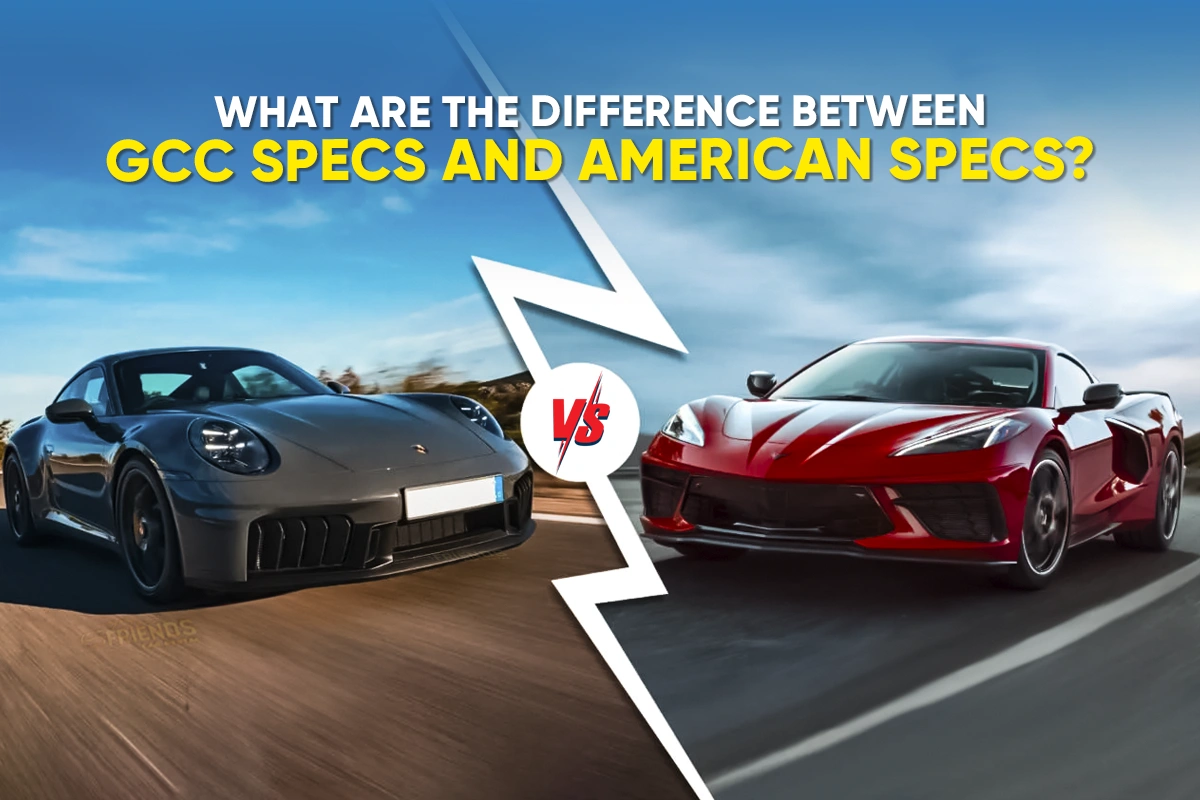
Choosing the right vehicle in the Gulf region hinges on understanding the crucial technical difference between GCC Specs and American Specs. While visually identical, the internal engineering is completely different. It dictates long-term performance, safety, and financial value in the unique local environment. GCC-Spec cars are factory-built to comply with the GCC standards, featuring modifications necessary to endure extreme heat, high humidity, and prevalent desert sand.
Conversely, American Specs (US Specs) vehicles are tailored to the generally milder North American climate. They comply with US DOT/EPA regulations but lack the essential heavy-duty components. These aspects massively impact your ownership experiences, making it crucial for you to understand the differences before any purchase. Let’s explore the six core differences between GCC and US Spec cars.
Core Differences: Built for the Environment
1. Cooling Systems
The single most critical difference lies in how your car handles the extreme Gulf heat. GCC-spec cars have modified cooling systems while US-spec cars feature standard ones. This directly affects your comfort while driving.
● GCC-Spec Cars:
GCC-spec vehicles feature heavy-duty cooling components designed to counteract the Gulf's severe temperatures, which routinely exceed 50°C in the summer. They come equipped with:
● Larger radiators and fans for high thermal load to dissipate heat rapidly.
● Greater coolant volume and specialized hoses to prevent pressure-related failures.
They are programmed to manage heat more aggressively, ensuring the engine maintains optimal operating temperatures, even during stop-and-go traffic.
● American-Spec Cars:
These cars rely on standard cooling systems, adequate for the milder US climates. However, they are fundamentally inadequate for the prolonged thermal stress of the desert. This deficiency is not minor; you will face a significant risk of:
● Overheating and premature engine failure. Standard systems struggle under the sustained high ambient heat.
● Weakened AC performance. Engine overheating compromises AC performance, directly impacting your comfort.
2. Air Filtration
The air your engine breathes in the GCC is dramatically harsher than in North America. Which is why GCC cars come with modified filtration systems while the US spec cars feature normal ones. The advanced filtration in GCC cars is mandatory to protect critical components like the engine and the air conditioning system.
● GCC Spec Vehicles:
The vehicles feature multi-stage, heavy-duty filtration systems explicitly designed to handle high concentrations of particulate matter. This engineering protects your engine from abrasive damage and prevents premature wear.
● Enhanced air filters utilize thicker, denser filter media and larger surface areas to trap fine desert dust, extending the engine’s lifespan.
● Superior cabin filters ensure the quality of the air you breathe inside the cabin remains clean. They protect your health and keep the AC components functional.
● American Spec Vehicles:
US spec cars are built for milder, less dusty conditions, similar to EU spec cars. They come with standard filtration systems that are a clear liability in the Gulf. You should be aware of the serious operational risks this poses:
● Standard filters quickly become saturated with fine desert sand, which restricts airflow and dramatically reduces engine performance.
● If the filter fails or clogs, abrasive dust particles can enter the engine, leading to premature wear on cylinders and pistons. This will result in costly engine repair.
3. Air Conditioning
In the Gulf, air conditioning is not a luxury; it is a critical safety feature that directly affects your comfort and driving focus. The sheer intensity of the sun and prolonged high temperatures demand a system engineered for relentless, high-capacity cooling.
● GCC Spec Cars:
GCC cars come with specialized, heavy-duty AC systems that are designed to cool the cabin rapidly and sustain comfort. They even tackle the ambient temperature of over 50°C. This means a superior ownership experience for you.
● They have larger compressors and enhanced condensers to deliver a significantly higher volume of colder air.
● Better door and roof insulation with high-grade tinted glass ensures minimized cabin heat load, making the AC more effective.
● Insulated lines prevent refrigerant from overheating before it reaches the evaporator, ensuring maximum cooling efficiency.
● US Spec Cars:
The standard AC systems in these cars are for moderate heat and are simply incapable of handling the Gulf’s punishing environment.
● Standard components struggle to overcome the sustained heat load. It results in lukewarm air and discomfort during the hottest months (Jun-Aug).
● These systems have to run at maximum capacity constantly to accommodate heat. This leads to early failure of the compressor and other costly AC components.
Compliance and Long-Term Value
4. Corrosion and Rust Protection
The Gulf region’s high humidity, combined with the salty air near coastal areas, creates a perfect environment for rust and corrosion. This directly threatens the structural integrity and long-term value of your vehicle. GCC spec and American spec cars have varying builds to tackle this issue.
● GCC Cars:
These cars come with factory-applied, heavy-duty anti-corrosion treatments specifically to resist the aggressive Gulf atmosphere. This means superior defense for your car:
● A thicker, more robust protective underbody coating on the chassis and vulnerable metal surfaces repels moisture and salt.
● Critical components, electrical wiring, and seams have specialized seals to prevent moisture ingress. This prevents internal rust and electrical failure.
● American Cars:
These vehicles only feature standard rust proofing, which is insufficient for the coastal humidity of the GCC. This lack of specialized protection compromises your car’s structural health.
● Standard coatings break down quickly under constant humidity and salt exposure. This allows rust to attack the frame and body panels almost immediately.
5. Regulations and Features
The regulatory environment dictates more than just paperwork. It defines the features that ensure your safety and the seamlessness of your daily driving experience in the GCC. When you choose a car, you must choose a specification that speaks the language of the local roads and authorities.
● GCC Specs Vehicles:
GCC cars are specifically built to comply with the Gulf Standards Organization (GSO) and are fully tailored for local use, guaranteeing a perfect fit for your life:
● The speedometer is correctly marked in kilometers per hour (km/h), and your car’s radio frequencies and navigation systems are pre-calibrated to function precisely across the GCC region.
● The vehicle's lights, emissions, and safety features are validated against mandatory GSO standards. This ensures you face zero issues during registration, licensing, and border crossings.
● American Specs Vehicles:
These imports comply with US Department of Transportation (DOT) and Environmental Protection Agency (EPA) standards. It creates immediate functional and legal hurdles for you.
● The primary speedometer reading is often in miles per hour (mph). It requires you to constantly convert units or rely on smaller, less visible digital displays, compromising your driving focus.
● The radio and navigation systems are frequently region-locked to North American frequencies and maps, rendering them useless in the GCC. It diminishes the value of your high-tech purchase.
6. Resale Value and Warranty
The final, and perhaps most financially significant, difference lies in the car’s perceived long-term value and the crucial support you receive after purchase. You are making a major financial decision, and choosing the right specification directly affects your investment's safety and return.
● GCC Specs:
GCC cars offer you complete assurance and the highest retained value in the local market:
● GCC Spec vehicles maintain a higher market perception and sell for a premium, typically retaining up to 15-20% more value than imported equivalents over five years.
● You receive a full manufacturer-backed warranty that is valid across all official dealerships in the region. This guarantees reliable service and cost-free repairs for covered mechanical issues.
● American Specs:
American imported cars carry a substantial financial risk for you due to market perception and lack of official support:
● Buyers often discount US Specs due to concerns over mechanical suitability and potential hidden accident history (salvage titles). This directly diminishes your car's worth when you decide to sell.
● Local manufacturer dealerships will not honor the original US warranty. You will be responsible for all out-of-pocket repair costs. It can turn any major mechanical failure into an immediate financial loss.
Final Thoughts
Choosing between a GCC Spec car and an American Spec import involves far more than just price. It determines your long-term security, reliability, and financial return. These significant differences, from the engine’s cooling system to the vehicle's regulatory compliance, massively impact your ownership experience in the Gulf region.
You should confidently opt for a GCC Spec vehicle, which is explicitly engineered for the environmental extremes, offering superior performance. They guarantee safety, and the crucial benefit of maximum retained market value upon resale. While the initial cost of a US Spec car might be significantly lower, your investment is not secure against catastrophic mechanical failure and the inevitable financial depreciation associated with non-compliant imports.
FAQs
#1. Can I convert an American spec car into a GCC spec vehicle?
No, you cannot convert an American spec car into a GCC spec vehicle. You can only upgrade individual parts. You cannot replicate the factory-engineered chassis protection and build.
#2. Why are American spec cars cheaper to buy in the Gulf?
American spec vehicles often have salvage histories and lack manufacturer warranties, which lowers their market value compared to GCC models.
#3. Will a US spec car pass the local vehicle inspection?
Yes, usually a US spec car passes the local vehicle inspection in the UAE. However, you must ensure the vehicle meets strict safety, emissions, and cooling system standards for the extreme climate.
#4. Is the air conditioning in a US spec car really that different?
Yes, the air conditioning in a US spec car is really different. GCC systems use larger compressors and heavier insulation specifically designed to handle sustained temperatures exceeding 50°C.
#5. How can I verify if a car is truly a GCC spec?
You should check the VIN plate on the driver-side door frame for a GSO (Gulf Standards Organization) sticker. You can also verify the specs by checking the chassis number through official local dealership databases.
Leave a Reply
Your email address will not be published. Required fields are marked *
Car Rental in Dubai


AED 2500
DAY
AED 55000
MONTH
-
 SUV
SUV - 4 Doors
- 5 Seats
 SUV
SUV  4 Doors
  5 Seats
 - 1 Day Rental Available
- Deposit: Not Required
- Insurance Included
AED 5500
DAY
MONTH
- Sports
- 2 Doors
- 2 Seats
- 1 Day Rental Available
- Deposit: Not Required
- Insurance Included

AED 1200
DAY
MONTH
- SUV
- 4 Doors
- 5 Seats
- 1 Day Rental Available
- Deposit: Not Required
- Insurance Included

AED 1600
DAY
MONTH
- SUV
- 4 Doors
- 5 Seats
- 1 Day Rental Available
- Deposit: Not Required
- Insurance Included

AED 1500
DAY
MONTH
- SUV
- 4 Doors
- 5 Seats
- 1 Day Rental Available
- Deposit: Not Required
- Insurance Included