




























Mercedes-Benz GLC Common Problems and Solutions
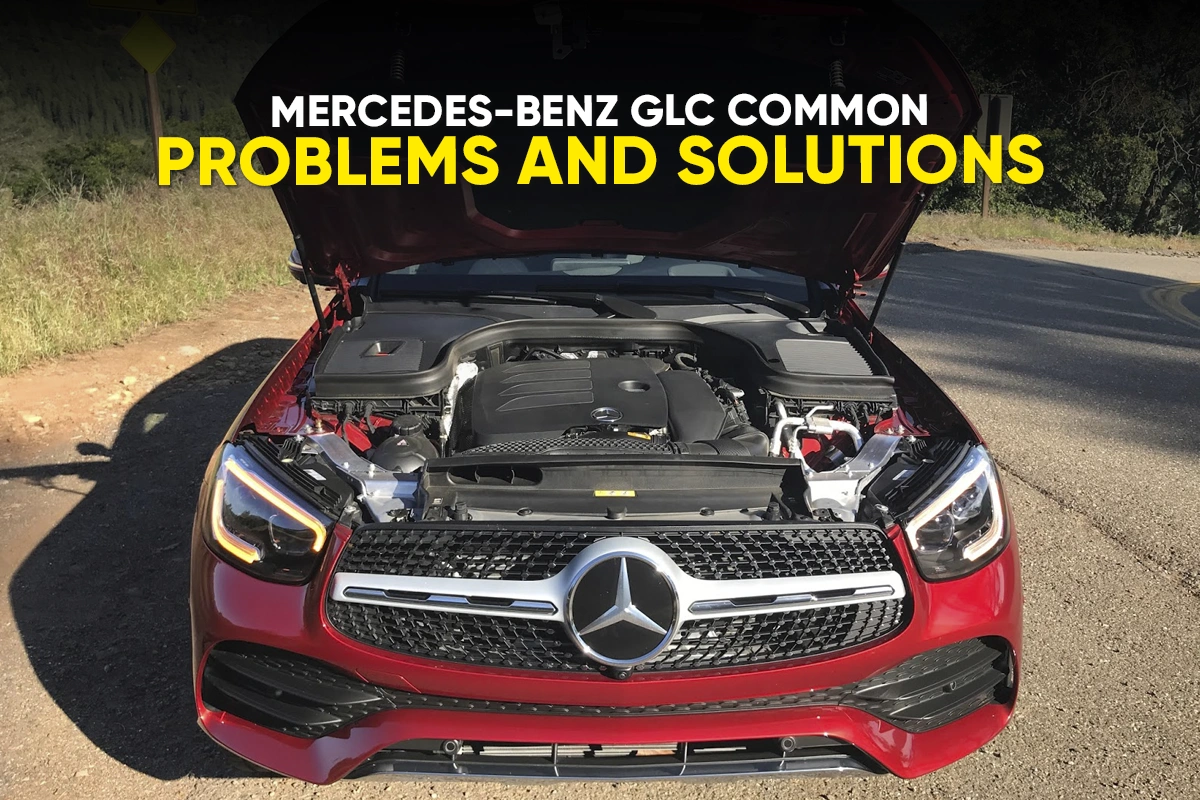
The Mercedes-Benz GLC stands as the global benchmark for compact luxury SUVs. It perfectly blends everyday usability with core Mercedes refinement. Spanning two major generations (X253 and X254), this top-selling model has delivered sophistication and capability to millions. However, even this segment leader is not completely free of specific long-term issues. You must be prepared for specific mechanical and electronic quirks over time. This expert guide details eleven common GLC problems and solutions. Dive in now to keep your sophisticated SUV operating at peak performance. You can proactively anticipate repairs and potentially save thousands in unexpected ownership costs.
10 Common Mercedes-Benz GLC Issues
Issue #1. M274/M264 Engine Timing Chain & Tensioner Wear
What Happens:
This is one of the most serious mechanical issues affecting the high-volume GLC 300 models. You might hear a distinct rattle or whine during a cold start, especially as your mileage on the vehicle increases. This noise is a clear indication of premature wear in the timing chain tensioner and its associated components. If you ignore this sound, the issue can quickly lead to a serious timing chain failure. This kind of engine failure is catastrophic and extremely expensive to fix. The 2.0-liter four-cylinder engine in the GLC 300 is the primary engine of concern for this problem.
Affected Models:
GLC 300 (X253 generation, 2015–2022).
GLC 250 models in certain markets.
This impacts vehicles equipped with the M274 or later M264 4-cylinder engines.
Symptoms:
A loud, metallic rattling or whining noise when starting the engine cold.
The noise usually lasts for a few seconds before the engine quiets down.
The Check Engine light may illuminate, often with timing-related fault codes.
A general lack of engine power or a rough idle.
Common Causes:
The timing chain tensioner unit fails to maintain proper tension on the chain.
Early degradation of the plastic timing chain guide rails occurs frequently.
Extended oil change intervals often contribute to sludge buildup and tensioner blockage.
Solutions:
Replace the timing chain tensioner unit immediately upon hearing the rattle.
For higher mileage vehicles, replacing the chain and all guide rails is strongly recommended.
Ensure you use only high-quality synthetic oil and adhere to strict maintenance intervals.
Check the camshaft sprockets for wear, replacing them if necessary during the procedure.
Estimated Repair Cost:
Timing Chain/Tensioner Replacement: AED 7,000 – AED 15,000.
Related Article: Mercedes-Benz A-Class Common Problems and Solutions
Issue #2. Front Differential/Transfer Case Oil Leaks
What Happens:
This is a frequently reported problem for GLC models equipped with the 4MATIC all-wheel-drive system. Owners of 4MATIC models often report persistent oil leaks. The most common source of this leak is the front differential input shaft seal. This is where the differential assembly mates with the transmission housing. You will see this issue as small, dark oil spots underneath the vehicle when it has been parked. Fixing this requires extensive labor. This is due to the challenging and cramped location of the component within the engine bay.
Affected Models:
GLC 300 4MATIC (X253 and early X254).
GLC 43 AMG (X253).
GLC 63 AMG (X253).
This issue is specific to the 4MATIC all-wheel-drive platform.
Symptoms:
Small puddles or spots of dark fluid are visible underneath the front of the vehicle.
A greasy film is evident on the bottom side of the engine and transmission housing.
Low fluid levels can eventually cause a noticeable whine from the front axle at speed.
Burning oil smells are sometimes noticeable if the leaking fluid drips onto the hot exhaust.
Common Causes:
Premature failure or hardening of the front differential input shaft seal.
Excessive heat buildup degrades the sealing materials faster than expected.
Slight manufacturing tolerance issues can place uneven stress on the seal surface.
Solutions:
Drain the transmission fluid and remove the front differential assembly.
Replace the faulty input shaft seal and all associated gaskets.
Check the differential housing for scoring or warping before installing the new seal.
Refill the differential and transmission with the correct, approved fluid type.
Estimated Repair Cost:
Front Differential Seal Replacement: AED 3,500 – AED 6,500.
Issue #3. 9G-Tronic Transmission Hard Shifting & Juddering
What Happens:
The nine-speed automatic transmission (9G-Tronic) is widely used across the GLC lineup. While generally robust, many owners report occasional harsh downshifts. A noticeable juddering feeling can occur, particularly at low speeds or during coasting. This issue makes the vehicle feel less refined than expected. Often, a simple software update can resolve the rough behavior. If that fails, a complex fluid flush or valve body service may be necessary.
Affected Models:
All GLC models (X253 and X254 generations).
All models equipped with the 9G-Tronic (725.0) transmission.
Early X253 generation vehicles are most commonly affected by initial software mapping issues.
Symptoms:
Harsh downshifts, especially when slowing to a complete stop.
Juddering or vibration during low-speed gear engagement.
Delayed engagement when shifting from Park to Drive.
Occasional lurching or jerking during light throttle application.
Common Causes:
Software mapping inconsistencies in the TCU (Transmission Control Unit).
Valve body solenoid block pressure issues are causing erratic shifting.
Contaminated or degraded transmission fluid, even if mileage is low.
Solutions:
Perform the latest TCU software update and adaptation reset.
Conduct a complete transmission fluid and filter flush, ensuring only approved fluid is used.
Inspect and potentially replace the transmission valve body or solenoid block for mechanical faults.
Estimated Repair Cost:
TCU Update and Fluid Service: AED 1,500 – AED 12,000.
Related Article: Mercedes-Benz C-Class Common Problems and Solutions
Issue #4. LED Headlight Condensation & Failure
What Happens:
The GLC utilizes sophisticated LED or Multibeam LED headlight assemblies. These large, complex units are unfortunately prone to internal condensation over time. You may notice moisture build-up behind the lens, especially in humid or cold conditions. This condensation can cause a serious problem. The moisture eventually corrodes the sensitive electronic ballast modules. These modules are critical because they power the LED lights. You are often left with only one solution: replacing the entire expensive headlight unit due to persistent moisture or electrical failure.
Affected Models:
All GLC models (X253 and X254 generations).
Symptoms:
Visible fogging or condensation is present inside the headlight lens assembly.
The adaptive headlight features, such as turning beams, may fail.
Dashboard warning lights often appear due to lighting system errors.
One or more of the LED headlight beams ceases to function entirely.
Common Causes:
A compromised headlight housing seal allows moisture to infiltrate the unit.
The internal electronic ballast modules short-circuit due to prolonged water vapor exposure.
Micro-cracks develop in the plastic lens housing over time.
Solutions:
If condensation is minor, try to dry the assembly.
Ensure the rear access caps are sealed properly to prevent further moisture.
Replace the entire headlight unit for persistent moisture or electrical failure.
The replacement unit must include all the necessary electronic modules.
Estimated Repair Cost:
Headlight Unit Replacement: AED 9,000 – AED 18,000 (Per headlight unit).
Issue #5. High-Voltage Battery Degradation & Cooling Issues
What Happens:
This issue is entirely specific to the GLC 350e, the plug-in hybrid electric vehicle (PHEV) variant. You may notice a gradual but definite reduction in the vehicle's electric-only driving range over time. More critically, the high-voltage A/C system, which is responsible for cooling the battery pack, can experience failures. When this cooling system falters, it can prevent the vehicle from fully charging. This situation severely restricts the hybrid functionality of the car. You will find that fixing these specialized battery systems is extremely costly.
Affected Models:
GLC 350e (X253 generation, 2016–2019).
Symptoms:
A significant and noticeable reduction in electric driving range.
The vehicle refuses to charge fully or shows an error during the charging process.
The dashboard displays high-voltage system warnings.
You may notice the cooling fans running excessively or not at all.
Common Causes:
Standard degradation of the lithium-ion battery cells occurs naturally over time.
Failures within the dedicated high-voltage A/C compressor or cooling lines.
Sensor failures prevent the car's computer from regulating charging or cooling.
Solutions:
Diagnose the high-voltage battery cooling system for leaks or component failures.
Replace the faulty high-voltage A/C compressor or related sensors.
A Mercedes-Benz dealer often needs to update the battery management system (BMS) software.
For significant degradation, a full battery pack replacement may be necessary.
Estimated Repair Cost:
Cooling System Component Replacement: AED 8,000 – AED 20,000.
Full Battery Pack Replacement: AED 40,000+.
Related Article: Mercedes-Benz E-Class Common Problems and Solutions
Issue #6. COMAND/MBUX Infotainment Screen Freezing
What Happens:
The GLC's central display is where you interact with nearly all vehicle functions. The screen is controlled by the COMAND (older models) or MBUX (newer models) system. Unfortunately, this system is frequently prone to software bugs and intermittent hardware issues. You might experience the central screen freezing completely, restarting randomly while driving, or simply turning into a blank black screen. This issue is particularly frustrating because the system controls critical functions like navigation and climate settings.
Affected Models:
All GLC models (X253 and X254 generations).
Symptoms:
The central touchscreen or digital gauge cluster freezes mid-operation.
The system restarts randomly, sometimes several times during a short trip.
You find that Bluetooth or Apple CarPlay/Android Auto connections drop constantly.
Navigation functions are slow to load or fail to respond to simple commands.
Common Causes:
Software glitches or data corruption often occur during over-the-air updates.
Internal head unit overheating can cause a failure of the main processing board.
Poor connectivity with auxiliary modules causes intermittent communication errors.
Solutions:
First, attempt a system hard reset by holding down the power button for about 10 seconds.
Ensure the dealer installs the latest software updates and firmware patches promptly.
If the problem persists, replacement of the main head unit (COMAND or MBUX module) is necessary.
Estimated Repair Cost:
Head Unit Replacement: AED 8,000 – AED 15,000.
Issue #7. Engine Mount & Transmission Mount Failure
What Happens:
The engine mounts are designed to isolate the cabin from the engine's vibrations. They also absorb the torque forces generated during acceleration and braking. On the GLC, particularly the four-cylinder GLC 300 and the high-output AMG GLC 43, these mounts tend to wear out sooner than expected. You will start to feel this failure as an excessive, unwelcome vibration. This vibration transmits through the steering wheel or the seat. Furthermore, the vehicle may exhibit a distinct clunk or jerk during heavy acceleration or braking maneuvers.
Affected Models:
GLC 300 (X253 and X254).
GLC 43 AMG (X253).
This issue is common across both the 4-cylinder and high-performance V6 models.
Symptoms:
Excessive vibration is noticeable in the cabin at idle, especially when in Drive or Reverse.
A distinct clunking sound occurs when the transmission shifts under hard acceleration.
Harshness or a rocking motion is felt when turning the engine on or off.
You feel increased movement or shuddering through the steering wheel or brake pedal.
Common Causes:
The rubber components within the fluid-filled hydraulic mounts degrade quickly.
High torque output, particularly in the AMG models, accelerates component wear.
Heat exposure from the engine contributes significantly to rubber hardening and cracking.
Solutions:
Visually inspect the mounts for cracks, separation, or signs of fluid leakage.
Replace both engine mounts and the transmission mount simultaneously for balanced support.
Use only genuine OEM or high-quality performance-rated replacement parts.
Estimated Repair Cost:
Engine and Transmission Mount Replacement: AED 4,000 – AED 8,000.
Related Article: Mercedes-Benz G 63 Common Problems and Solutions
Issue #8. Worn Suspension Bushings & Control Arms
What Happens:
Owners of the GLC often report noticeable, annoying suspension noise. This is particularly true when driving over small potholes or speed bumps. This noise is almost always due to premature wear in the rubber bushings of the front control arms. The stabilizer links are also a frequent culprit. When these rubber components fail, they introduce slack into the suspension. This slack negatively affects both the comfort and the precision of the steering. You will find that fixing this usually requires replacing the entire component, not just the bushing itself.
Affected Models:
All GLC models (X253 generation, 2015–2022).
Symptoms:
You hear a loud, audible clunking or knocking noise from the front suspension.
The noise is most noticeable when traveling slowly over rough pavement or speed bumps.
The steering feels looser or less precise than when the vehicle was new.
Premature or uneven wear is visible on the front tires.
Common Causes:
The rubber compound in the bushings degrades quickly due to constant stress and flexing.
Road debris, salt, and heat contribute significantly to rubber hardening.
Suspension misalignment after impact can accelerate wear on these specific components.
Solutions:
Inspect the front control arms and stabilizer link bushings for visible cracking or tearing.
Replace the entire worn control arm or stabilizer link assembly.
Perform a full four-wheel alignment after component replacement.
Consider installing aftermarket polyurethane bushings if they are available for increased durability.
Estimated Repair Cost:
Front Control Arm Replacement (Per Side): AED 2,500 – AED 5,000.
Issue #9. Blower Motor Squeal or Rattle
What Happens:
You may start to hear an annoying squealing or chirping noise. This noise originates from behind the dashboard. It is a very common complaint for GLC owners. The sound usually intensifies when the fan speed is set to low or medium. This persistent sound is a tell-tale sign that the HVAC blower motor or its internal bearing is failing. This failure typically doesn't affect the airflow. However, the persistent noise significantly detracts from the cabin's luxury and quiet comfort.
Affected Models:
All GLC models (X253 generation, 2015–2022).
Symptoms:
A high-pitched squeal or chirping noise is heard from the passenger footwell area.
The noise increases or decreases with the fan speed setting.
A mild rattling sound is noticeable when the fan first engages.
The sound is often loudest at low fan settings.
Common Causes:
The internal bearing within the blower motor unit fails prematurely.
Debris, such as small leaves or dust, enters the fan cage and causes imbalance.
Electrical resistance leads to overheating and warping of the plastic components.
Solutions:
Remove the glove box and the under-dash panel to access the blower motor.
Inspect the fan cage for foreign debris and clean it thoroughly.
If the noise persists, you must replace the blower motor assembly.
Ensure the new motor is securely fastened to prevent vibration noise.
Estimated Repair Cost:
Blower Motor Replacement: AED 1,500 – AED 3,500.
Related Article: Mercedes-Benz S-Class Common Problems and Solutions
Issue #10. Rear Subframe Corrosion
What Happens:
This is a major safety and structural concern that primarily affects older X253 GLC models. The problem is most acute for vehicles operating in regions that frequently use road salt. The steel rear subframe is a critical component. It supports the entire rear suspension, differential, and axles. Unfortunately, this component is highly susceptible to severe rust. Corrosion can significantly weaken the subframe's structure. This degradation risks catastrophic failure of the suspension mounting points. You must inspect this part carefully, as structural issues can compromise the vehicle's safety.
Affected Models:
All GLC 4MATIC models (X253 generation, 2015–2022).
Symptoms:
You hear loud, metallic clunking noises coming from the rear suspension system.
The vehicle's alignment feels loose or highly unstable, especially when cornering.
The rear of the car may sit noticeably unevenly or sag to one side.
You may observe excessive rust or visible holes in the subframe during a visual inspection.
Common Causes:
Exposure to road salt and moisture accelerates corrosion significantly on the steel subframe.
Insufficient factory anti-corrosion coating allows rust to form on internal seams.
Road debris and dirt trapped against the metal hold moisture.
Solutions:
Have a professional technician inspect the subframe for structural integrity immediately.
Replacement of the entire rear subframe assembly is often the only permanent fix for severe corrosion damage.
Apply additional anti-rust coatings, such as fluid film, as a preventive measure on non-corroded units.
Estimated Repair Cost:
Rear Subframe Replacement: AED 10,000 – AED 20,000.
Final Thoughts
The Mercedes-Benz GLC is a global benchmark for compact luxury SUVs, blending everyday usability with Mercedes refinement. However, its high-end ownership demands vigilance. You now know the eleven most common Mercedes-Benz problems and solutions. This proactive knowledge is your best tool for seamless ownership. Addressing critical issues like the GLC 300 Timing Chain rattle early effectively helps you avoid massive bills for catastrophic engine failure. Similarly, knowing about the Front Differential leaks allows you to protect your 4MATIC system.
Leave a Reply
Your email address will not be published. Required fields are marked *
Car Rental in Dubai

AED 2500
DAY
AED 55000
MONTH
-
 SUV
- 4 Doors
- 5 Seats
 SUV
 4 Doors
 5 Seats
- 1 Day Rental Available
- Deposit: Not Required
- Insurance Included
AED 5500
DAY
MONTH
- Sports
- 2 Doors
- 2 Seats
- 1 Day Rental Available
- Deposit: Not Required
- Insurance Included
AED 1200
DAY
MONTH
- SUV
- 4 Doors
- 5 Seats
- 1 Day Rental Available
- Deposit: Not Required
- Insurance Included
AED 1600
DAY
MONTH
- SUV
- 4 Doors
- 5 Seats
- 1 Day Rental Available
- Deposit: Not Required
- Insurance Included
AED 1500
DAY
MONTH
- SUV
- 4 Doors
- 5 Seats
- 1 Day Rental Available
- Deposit: Not Required
- Insurance Included