









































What to Do If Your Car Gets Towed in Dubai?
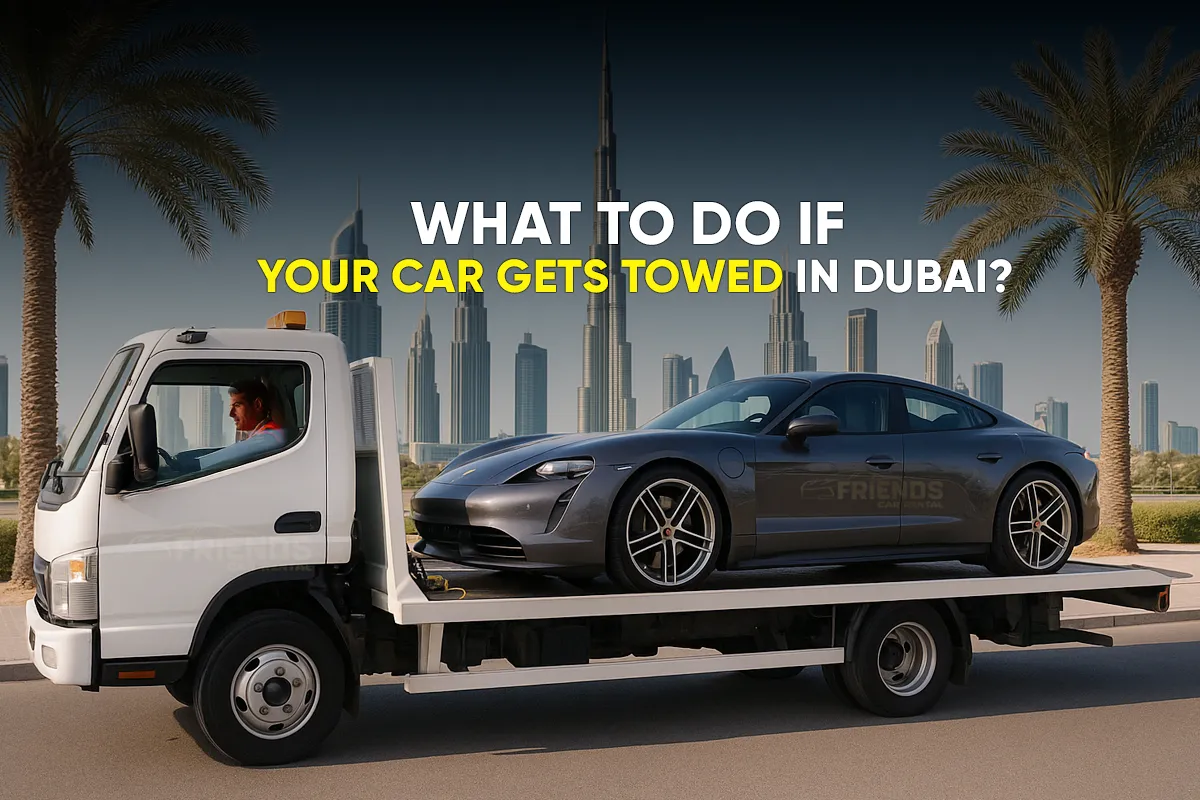
Imagine your car gone—towed, not stolen, when you return
to the parking spot. Your travel plan goes out of the window. Panic sets
in—hefty fines, impound lot hassles, potential rental policy violation (if
applicable), and time constrictions. The frustration grows as you might not
know where and how to start—far is the resolution. But don’t worry. Our
step-by-step guide explains exactly what to do if your car is towed in Dubai.
Learn to tackle the situation: from locating your car to retrieving it and avoiding
future towing. Make insightful decisions to make your travel seamless.
What to do if your car gets towed in Dubai:
- Find out why your car was towed.
- Confirm the towing.
- Locate the impounded vehicle.
- Gather necessary documents.
- Visit the impound lot.
- Pay towing fees and fines.
- Complete impound lot process.
- Retrieve the car.
Why Was Your Car Towed in Dubai
Knowing the exact reason why your car was is crucial to
calculate potential penalties and prepare accordingly. These can be some common
reasons for a towed car in Dubai:
Illegal Parking:
- Parking in a no-parking zone.
- Blocking traffic or emergency lanes.
- Exceeding paid parking time limits
- Parking in reserved handicapped spaces without a permit.
- Obstructing emergency vehicle access.
- Parking on sidewalks or pavements.
- Not paid the parking tariff or ticket not visible.
- Parked in a reserved spot or without a permit.
Safety Violations:
- Vehicle deemed unsafe or abandoned (30+ days continuous
parking).
- Lack of valid
registration or insurance.
Traffic Violations:
- Involvement in an accident where the vehicle needs to be
moved for investigation or safety.
- Serious traffic offenses as determined by authorities.
Note: Some reasons will lead to immediate towing
(e.g., parking in fire hydrant zones), while others might not (e.g., vehicle
abandonment).
Immediate Steps to Take When Your Car Is Towed
Immediate action is crucial to resolve your car towed
situation as fees (towing and storage) can rise steeply. The same day retrieval
is recommended to avoid additional costs. Follow these steps chronologically to
prepare for impounded vehicle retrievement:
1. Confirm the Towing
Be sure that authorities towed your car before anything
else. It could be theft (highly unlikely in Dubai). Call the police and file a
report. They will tell you if it is towed or stolen. Here are some typical
processes to find out if your vehicle was towed:
- Ask the locals (nearby shops or establishments). Someone
must have seen the incident.
- Check for signage. Authorities leave signs, indicating
towing and contact information.
- Inspect the immediate area for any markings or notices
left by the towers.
- Call 901, Dubai Police non-emergency number to inquire
about towing. Don’t call 999, it’s for emergencies like accidents.
- Alternatively, contact the municipality/RTA. They often
handle towing related to parking violations.
2. Locate the Impounded Vehicle
Once it is confirmed, you need to know where the
authorities have taken your vehicle. The authorities will provide you with the
information of your impounded vehicle. These are some ways to locate your
vehicle:
- Dubai Police non-emergency number (901). Provide vehicle
details (plate number, make, model).
- Check the Dubai Police website/mobile app. Use plate
numbers to track information.
- Inquire with Dubai RTA (Roads and Transport Authority).
They handle the parking-related tows. Get details via their website or call
helpline (800 9090). Usually RTA is the main source of impound vehicle
information.
- The impound notice will contain information about
location. It is only if you have a towing notice.
3. Gather Necessary Documents
Documentation is an important aspect of retrieving your
impounded vehicle in Dubai. Every document matters, from IDs to payment slips.
Here are the list of documents you should have:
- Emirate ID (for residents) & passport (for visitors).
- Vehicle registration card (Mulkiya).
- Driving license.
- Towing/violation notice (if available).
- Proof of insurance.
- Proof of Traffic
Fine Clearance.
- Rental agreement (if applicable).
- Police clearance report (if applicable).
A valid payment method is equally important. Dubai
authorities usually accept payment cash or via cards (debit or credit).
Retrieving Your Car from the Impound Lot
Once you know where your car is located and gathered the
necessary documents, you need to carry out these steps:
1. Visit the Impound Lot
The authorities (Dubai Police or
RTA) will provide you with the exact location of the impound yard. It could be
any one of the following:
- Al Qusais Vehicle Impound Yard (Police)
- Warsan 3 Dubai Police Impound Yard (Police)
- Lehbab Yard (RTA)
Don’t go to a random impound lot without confirming the
location. Again, RTA or Dubai Police will tell you where to go.
2. Pay Towing & Storage Fees
Pay up the towing and storage fees. As briefly mentioned
earlier, these fees will rise daily. The general fees are:
- Towing fee: One-time, ranging from AED 300 to AED 800.
Depends on distance and circumstances.
- Daily storage fee: It can range from AED 20 to AED 50 for
light vehicles.
- Release certificate fee: It can cost up to AED 100.
Disclaimer: These prices are generalized. They
might change with time and depending on various circumstances. Authorities will
have the accurate cost rates. Contacting them beforehand can be beneficial.
It is the responsibility of the vehicle owner to settle
these fees to retrieve the impounded car. For rental cars, it’s
renter’s—clearly outlined in rental policies. Typically no insurance
policies cover the impounded vehicle costs in Dubai, not even
comprehensive insurance.
3. Impound Lot Process
Once you pay the fees and provide them with the necessary
documents. The impound yard authorities will analyze and process your vehicle
release. Once verified and payment confirmed, you need to sign the release
form. Then, you will be directed to your vehicle location; you check the
vehicle condition, confirm the availability of your belongings, and drive away.
4. Police Impounded Cases
Some impound cases are related to the police. They will
require an extra step/document—police clearance report. Serious traffic rule
violations or accidents demand police reports. Make sure you get it before
visiting the impound yard. You can obtain this police clearance report by:
- Visit a nearby police station.
- Provide them necessary details: accidents or violations.
- Present necessary documents and IDs.
- Pay the required fine/fees.
Obtaining a police clearance report can take some time.
Start the process as soon as you sense that it is important. Confirm its
necessity with Dubai Police first while calling them for information.
Preventing Your Car from Being Towed in Dubai
Be safe than sorry. Make sure you practice these habits
while driving and parking your car in Dubai to avoid impoundment:
Understand Dubai’s Parking Rules:
- Never park in “No Parking” zones—often marked with red
and yellow or white lines.
- Avoid sidewalks, pedestrian crossings, or segments that
obstruct traffic flow.
- Be aware of different parking zones: free zones, paid
zones, or residential zones. They might have specific rules.
- Adhere to parking time limits and pre-pay via parking
meters, SMS, or RTA
app. Pay for extra time, just in case.
Be Mindful of Designated Parking Spaces:
- Avoid parking in loading/unloading zones. They have clear
posted signs right in front.
- Leave the parking allocated for disabled drivers, unless
you identify as a disabled individual.
- Don’t park in spaces allocated for taxis and buses.
Ensure Documentation and Road Worthiness:
- Keep your Mulkiya and insurance updated. Expired Mulkiya
can lead to impoundment. Have these two always with you while driving.
- Keep your vehicle well-maintained. Don’t let the
authorities feel that your car isn’t safe for the road.
Factor-in Time and Location:
- Parking during public holidays and special events might
have different regulations. Be aware of such changes while you park.
- Don’t leave your car in park for extended periods,
especially in areas with time restrictions.
- While parking in unfamiliar places, double check your
vehicle before walking away. Check for signs and make sure you are legally parked.
You will significantly reduce the probability of getting
your vehicle towed following these parking tips, and more important parking
fines.
Also, while driving, stay alert to avoid accidents at all
cost and serious traffic violations, like dangerous overtaking (14-day vehicle
impoundment).
Conclusion
Getting your car towed in Dubai can be a bitter
experience. So, what to do if your car is towed in Dubai? Act quickly and with
diligence. A good understanding of the retrieval processes can get out of it
quickly, with minimal cost. More importantly, responsible driving and informed
parking will help you avoid getting your car towed. Use the insightful tips
above to avoid parking-related fines and vehicle tows in Dubai. Stay informed,
park responsibly, drive safely, and make your journeys in Dubai seamless.
Leave a Reply
Your email address will not be published. Required fields are marked *
Car Rental in Dubai


AED 2500
DAY
AED 55000
MONTH
-
 SUV
SUV - 4 Doors
- 5 Seats
 SUV
SUV  4 Doors
  5 Seats
 - 1 Day Rental Available
- Deposit: Not Required
- Insurance Included

AED 5500
DAY
MONTH
- Sports
- 2 Doors
- 2 Seats
- 1 Day Rental Available
- Deposit: Not Required
- Insurance Included

AED 1200
DAY
MONTH
- SUV
- 4 Doors
- 5 Seats
- 1 Day Rental Available
- Deposit: Not Required
- Insurance Included

AED 1600
DAY
MONTH
- SUV
- 4 Doors
- 5 Seats
- 1 Day Rental Available
- Deposit: Not Required
- Insurance Included

AED 1500
DAY
MONTH
- SUV
- 4 Doors
- 5 Seats
- 1 Day Rental Available
- Deposit: Not Required
- Insurance Included