
























Most Common Chrysler Problems and Solutions
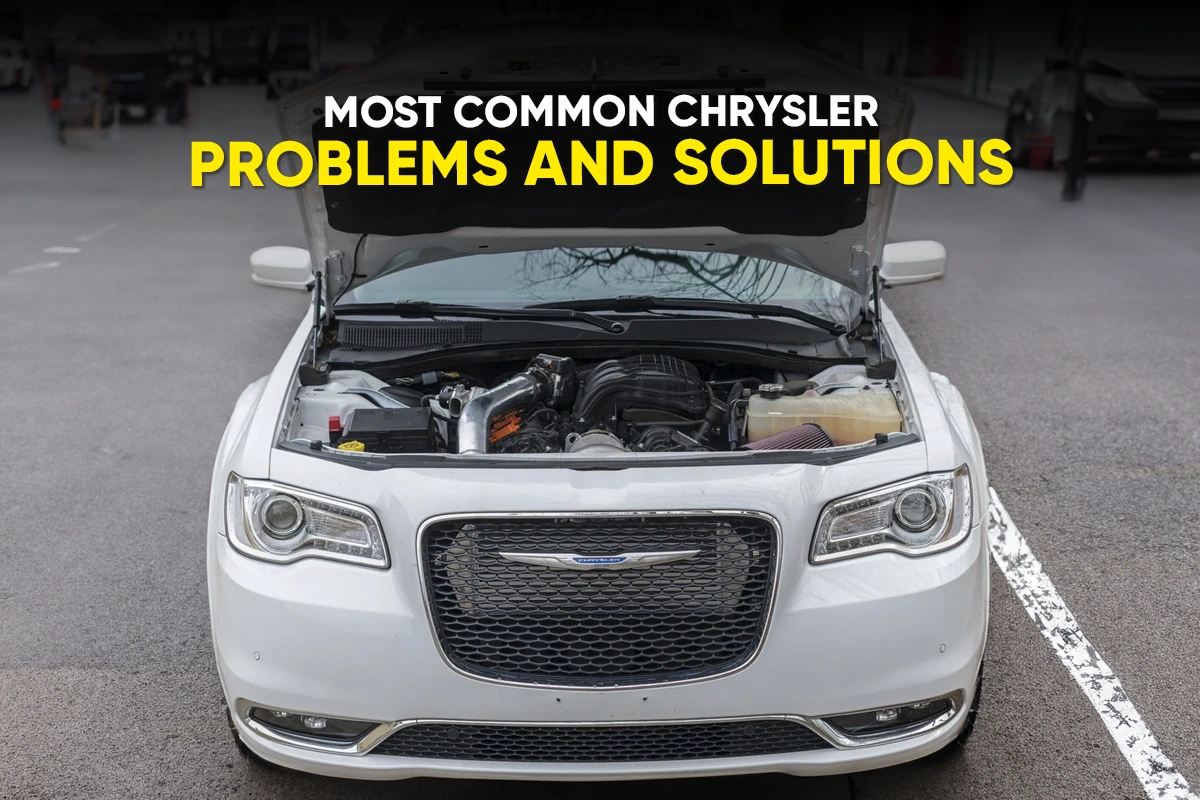
Searching for the most common Chrysler car problems and their verified solutions? You have absolutely landed in the perfect spot. This extensive guide gives you the precise details on the 13 most frequent Chrysler issues and their specific fixes. These in-depth breakdowns will give you the crucial insights to properly maintain your sedan or family minivan.
These American vehicles offer comfortable and very dependable performance, especially the popular Pacifica and 300 models. However, even these reliable vehicles demand a real understanding of their specific needs and proper upkeep. You need to know the essential, model-specific maintenance challenges to ensure flawless, safe, and stress-free operation on the local roads.
Discover these 13 critical Chrysler issues to help you avoid expensive and unexpected repairs. Understand the true cost of ownership and keep your Chrysler running as the reliable vehicle it is meant to be. Dive in now to master your Chrysler drive.
Related Article: Most Common Dodge Problems and Solutions
13 Common Chrysler Issues & Fixes
1. Transmission Problems.
What Happens:
You will likely notice your car's nine-speed automatic transmission struggling to shift gears smoothly or hesitating frequently. Owners report harsh jolts, sudden lunging, or pronounced shuddering, especially at lower speeds and while shifting into higher gears. The gears may often feel like they are slipping, or the vehicle experiences shifting harshness. The car may feel like it has a sudden loss of power during acceleration, or it may not engage the selected gear. These issues often stem from verified software glitches in the Transmission Control Module (TCM) and internal hardware defects in the transmission itself. If these problems are ignored, the transmission can fail completely, requiring a very expensive replacement.
Affected Models:
Chrysler Pacifica (2017 and later models)
Chrysler 200 (2015 to 2017 models)
Chrysler Voyager (2020 and later models)
Symptoms:
You feel a noticeable clunking or harsh jolt when shifting.
The gears slip, or the vehicle hesitates to accelerate strongly.
The Check Engine or transmission warning light illuminates.
You hear a whining or grinding noise during gear changes.
Common Causes:
Defects within the ZF 9HP nine-speed automatic transmission hardware.
Glitches in the Transmission Control Module (TCM) software.
Low or severely contaminated transmission fluid.
Failure of internal components like the clutch pack or solenoids.
Solutions:
Take the vehicle to a dealer for any necessary software updates.
Ensure the transmission fluid and filter are changed at proper intervals.
Replace faulty transmission sensors or solenoids as soon as possible.
Consider a professional rebuild or replacement if the unit completely fails.
Estimated Repair Cost:
Software Update/Reprogramming: AED 350–AED 750 (Diagnostic time).
Solenoid/Valve Body Replacement: AED 1,500–AED 5,000.
Complete Transmission Rebuild or Replacement: AED 9,000–AED 25,000+.
Related Article: Most Common Porsche Problems and Solutions
2. Uconnect Infotainment System Issue.
What Happens:
The Uconnect system, which manages critical functions like navigation and your backup camera, often malfunctions, leading to significant frustration. You will experience the touchscreen freezing or becoming completely unresponsive, sometimes while driving. The screen may go black, continuously reboot itself, or get stuck on the start-up logo. This defect disables important safety features, including the rearview camera and climate controls, posing a distraction and a genuine safety hazard. These issues are tied to internal software glitches and hardware defects in the Uconnect unit itself.
Affected Models:
Chrysler Pacifica (2017 to 2024 models)
Chrysler 300 (2015 and later models)
Chrysler Voyager
Symptoms:
The display screen freezes and becomes completely unresponsive to touch.
The screen goes black or continuously reboots during a drive.
You lose functionality of your backup camera and GPS navigation.
You notice bubbles or peeling on the touchscreen surface (delamination).
Common Causes:
Software glitches within the Uconnect operating system.
Hardware defects, including failure of the system's routing modules.
Delamination of the screen adhesive, causing "ghost touches."
Issues related to the Uconnect Box requiring a service visit.
Solutions:
Perform a soft reset by holding the volume and tuner knobs simultaneously.
Ensure the system software is fully up-to-date by connecting to Wi-Fi.
Seek professional help if the screen is peeling or showing bubbles.
Contact the dealer about known TSBs or warranty extensions for this part.
Estimated Repair Cost:
Soft Reset/Software Update: AED 0–AED 750 (Diagnostic fee).
Screen/Digitizer Replacement (Independent): AED 1,500–AED 3,000.
Complete Head Unit Replacement (Dealership): AED 3,500–AED 7,500+.
3. Excessive Oil Consumption.
What Happens:
Your engine either excessively burns the oil internally or leaks it out at an accelerated rate, causing the oil level to drop dangerously low between service intervals. In the 2.4L Tigershark engine, the defect causes oil to be burned in the combustion chamber, leading to low oil pressure and unexpected engine shutdown. This lack of proper lubrication significantly increases internal wear. Without an accurate low-oil warning light, you may not realize the danger until the engine stalls or is permanently damaged, which creates a major safety hazard.
Affected Models:
Chrysler 200 (2015 to 2017 models)
Chrysler 300 (With 3.6L V6 engine)
Chrysler Pacifica (With 3.6L V6 engine)
Chrysler Voyager
Symptoms:
You notice the oil level dropping rapidly on the dipstick.
The low oil pressure warning lamp illuminates while driving.
The engine suddenly stalls or shuts down without warning.
You smell a distinct burning oil odor while the car is running.
Common Causes:
A defect in the 2.4L Tigershark engine's piston rings.
Severe leaks from the plastic 3.6L V6 oil filter housing.
Internal failure of the engine's MultiAir system components.
A faulty internal oil level indicator system.
Solutions:
Establish a routine of checking your oil level every 1,000 miles.
Have an oil consumption test performed by a certified dealer immediately.
Replace the engine long block if the oil consumption test fails.
Repair any external leaks, such as the valve cover or oil pan gaskets.
Estimated Repair Cost:
Oil Consumption Test/Diagnosis: AED 450–AED 900.
Engine Long Block Replacement (Tigershark): AED 10,000–AED 20,000+.
Simple Gasket Leak Repair: AED 800–AED 2,000.
Related Article: Most Common Ferrari Problems and Solutions
4. Oil Cooler Leaks.
What Happens:
This issue occurs when the plastic oil filter housing and oil cooler assembly develops cracks, warping, or seal failure due to constant engine heat. The plastic component sits in the engine's "valley" and is subjected to extreme temperature fluctuations. When it fails, it causes a significant external leak of both oil and coolant onto the top and back of the engine block. This rapid loss of fluid can quickly lead to engine overheating or catastrophic internal damage if the oil level drops too low before you notice.
Affected Models:
Chrysler 300 (With 3.6L V6 engine)
Chrysler Pacifica (With 3.6L V6 engine)
Chrysler Town & Country (Later generations with 3.6L)
Chrysler Voyager
Symptoms:
You notice visible oil and/or coolant dripping under the vehicle.
The distinct, unpleasant smell of burning oil is present while driving.
Your engine temperature gauge reads higher than normal.
You see an oil film or sludge in your coolant reservoir fluid.
Common Causes:
The use of plastic material for the oil cooler housing and filter assembly.
Thermal cycling causes the plastic to become brittle and crack.
Gaskets and O-rings that seal the unit degrade from excessive heat.
Overtightening of the oil filter cap during previous service work.
Solutions:
Promptly replace the faulty plastic housing with an upgraded aluminum unit.
Always use a torque wrench to ensure the oil filter cap is tightened correctly.
Replace the intake manifold gaskets, as they must be removed for access.
Perform a full cooling system flush if any cross-contamination is present.
Estimated Repair Cost:
Aluminum Replacement Part Cost: AED 250–AED 600.
Labor and Gaskets (Total Repair): AED 1,500–AED 4,500.
Cost Escalates Significantly if Engine Damage Occurs: AED 10,000+.
5. Power Sliding Door and Power Liftgate Module Failure.
What Happens:
You will find that your power doors suddenly stop working correctly, which defeats the entire purpose of having a minivan. The power sliding doors often stop midway through opening or closing, or they may fail to latch securely after movement. This failure is frequently accompanied by an alert message like "Sliding Door Power Unavailable." Similarly, the power liftgate may fail to open or close, often due to a faulty control module that is susceptible to electrical shorts or water intrusion.
Affected Models:
Chrysler Pacifica (2017 and later models)
Chrysler Town & Country (Later generations)
Chrysler Voyager
Symptoms:
The sliding door stops abruptly halfway through its operation
A message appears on the dash, indicating power is unavailable.
The door opens but then immediately reverses and closes quickly.
The power liftgate fails to respond to either the fob or the interior switch.
Common Causes:
Broken wiring in the flexible harness that routes through the sliding door track.
Failure of the electric motor or the cable-driven mechanism itself.
The Power Liftgate Module (PLGM) is failing due to water intrusion.
Faulty control switches on the key fob or inside the vehicle.
Solutions:
Visually inspect the wiring harness for any broken or frayed wires.
Have the Power Liftgate Module software checked for needed updates.
Replace the faulty power sliding door motor or actuator assembly.
Keep the sliding door tracks clean and properly lubricated for smooth operation.
Estimated Repair Cost:
Power Sliding Door Motor/Actuator Replacement: AED 1,800–AED 4,000.
Power Liftgate Module (PLGM) Replacement: AED 1,000–AED 3,500.
Broken Wiring Repair: AED 500–AED 1,200.
Related Article: Most Common Bugatti Problems and Solutions
6. Faulty Advanced Headrest Restraint (AHR).
What Happens:
The Active Head Restraint (AHR) system is designed to deploy forward during a severe rear-end collision, but this safety feature often activates spontaneously. You will hear a loud sound like a gunshot or explosion as the headrest suddenly splits open and forcefully strikes the back of your head. This unexpected deployment causes severe distraction and a risk of head and neck injury, even when you are parked or driving slowly. Once deployed, the headrest mechanism cannot be reset by you and requires professional replacement.
Affected Models:
Chrysler 200 (2011 to 2017 models)
Chrysler 300 (Older models where the part was not replaced)
Chrysler Town & Country (Later generations)
Chrysler Voyager
Symptoms:
The headrest suddenly deploys forward with a loud, startling noise.
You experience immediate pain or discomfort in your head or neck area.
The headrest splits into two pieces and cannot be pushed back together.
You find small pieces of broken plastic near the headrest mechanism.
Common Causes:
A verifiable defect in the internal plastic bracket that holds the spring mechanism.
The plastic component fails under the constant high pressure from the spring.
The failure is sometimes misdiagnosed as an electrical issue in the wiring harness.
The failure is due to material fatigue from stress over time.
Solutions:
Do not attempt to force the deployed headrest back into its position yourself.
Contact the dealer to check if your Vehicle Identification Number (VIN) is covered by any warranty extensions.
Retain all documentation and repair receipts, as this issue has been subject to class-action lawsuits.
Replace the entire headrest unit, as the deployed mechanism is not repairable.
Estimated Repair Cost:
Headrest Unit Replacement Cost: AED 2,200–AED 4,000+.
Dealer Diagnostic Fee: AED 350–AED 800.
7. AC System Leaks and Rear Evaporator Failure.
What Happens:
You will notice a gradual but persistent decline in your air conditioner's cooling power, especially affecting the rear of the cabin in minivans. This problem is most often caused by a refrigerant leak from the rear evaporator core located behind an interior side panel. The evaporator core and its connecting lines are susceptible to corrosion over time, which causes small holes. Once the refrigerant escapes, the entire AC system loses pressure, and the compressor will shut down to protect itself, leaving your car with only warm air.
Affected Models:
Chrysler Pacifica (All generations with rear AC)
Chrysler Town & Country (Later generations with rear AC)
Chrysler Voyager
Chrysler 300 (Front evaporator leaks are also common)
Symptoms:
You only feel warm air blowing from the vehicle's vents.
The AC system works intermittently, cooling only slightly at times.
You hear the compressor clutch clicking on and off rapidly.
A strange, sweet, or slightly musty odor is present in the cabin air.
Common Causes:
Corrosion of the evaporator core tubes due to moisture and contaminants.
Failure of the O-ring seals on the refrigerant lines connecting to the core.
Wear and tear and constant temperature cycling causing leaks at seams.
Road debris or environmental factors damaging the refrigerant lines.
Solutions:
Have the AC system professionally inspected with a UV dye test to locate the leak.
Replace the faulty evaporator core and all associated O-rings and seals.
Perform a full evacuation and recharge of the entire AC system with the correct refrigerant.
Never use an "AC Stop Leak" product, as it can severely damage the compressor.
Estimated Repair Cost:
AC System Diagnostic and Recharge: AED 750–AED 1,500.
Rear Evaporator Replacement (Mostly Labor): AED 5,000–AED 7,500+.
Total AC System Component Replacement: AED 9,000–AED 15,000+.
Related Article: Most Common Jeep Problems and Solutions
8. Premature Suspension Component Wear.
What Happens:
Your car may develop severe handling issues and unsettling noises much sooner than you would expect, which is caused by the premature failure of suspension components. The rubber bushings in the control arms often crack or tear, and the struts or shocks lose their dampening ability early. This makes your car feel much less stable and rougher when driving over bumps. If you ignore this problem, the excessive wear accelerates tire degradation and compromises the safety of your steering and braking systems.
Affected Models:
Chrysler Pacifica (All generations)
Chrysler 300 (Post-2015 models)
Chrysler Voyager
Symptoms:
You hear a noticeable clunking or rattling noise when driving over bumps.
Your ride feels excessively bumpy or the car bounces more than twice after a dip.
You feel continuous vibrations through the steering wheel or the car floor.
There is evidence of uneven tire wear or an inability to hold alignment.
Common Causes:
Defects in the design or quality of the rubber control arm bushings.
Excessive stress caused by the vehicle's weight or frequent hauling (Pacifica).
Exposure to harsh road conditions, including road salt and potholes.
Corrosion that weakens the metal components of the control arms and joints.
Solutions:
Have your entire suspension system inspected for loose or worn parts immediately.
Replace worn control arm bushings or the entire control arm assembly.
Install high-quality, name-brand struts and shocks in matching pairs.
Get a professional wheel alignment completed after any suspension part replacement.
Estimated Repair Cost:
Control Arm Assembly Replacement: AED 1,800–AED 4,500 (per axle).
Strut and Coil Assembly Replacement (Pair): AED 2,500–AED 5,000+.
Wheel Alignment Service: AED 300–AED 700.
9. Electrical System Malfunctions, Sensor, and Solenoid Problems.
What Happens:
These electrical problems are notoriously intermittent and difficult to diagnose, often causing a variety of erratic behaviors across multiple systems. You may experience random dash lights, a dead battery overnight, or accessories like wipers and signals activating without warning. Many faults are traced back to failing sensors, such as those controlling variable valve timing (VVT), or internal shorts within the Total Integrated Power Module (TIPM) found in older models. Transmission solenoids are electro-hydraulic valves that fail and prevent smooth shifting by disrupting fluid pressure.
Affected Models:
Chrysler 300 (All post-2015 models)
Chrysler Pacifica (All generations)
Chrysler 200 (All generations)
Chrysler Voyager
Symptoms:
Your battery unexpectedly drains overnight, causing a no-start condition.
You experience random and unpredictable behavior from the wipers or turn signals.
The Check Engine light or transmission warning light illuminates immediately.
Shifting feels harsh or delayed due to a solenoid not engaging correctly.
Common Causes:
Failing sensors that provide incorrect data to the engine computer (PCM).
Defective solenoids within the transmission valve body or engine (VVT).
Parasitic drain issues where a module stays awake after the car is off.
Older models have chronic failure of the Total Integrated Power Module (TIPM).
Solutions:
Get a professional diagnostic scan for trouble codes (DTCs) immediately.
Test the electrical system for a parasitic draw and trace the source fuse.
Replace the faulty solenoids or sensors that are causing the specific warning light.
Ensure the battery is load-tested and the alternator is charging properly.
Estimated Repair Cost:
Sensor Replacement (VVT/Crankshaft): AED 600–AED 2,500.
Solenoid Replacement (Transmission): AED 1,500–AED 5,000.
TIPM/Fuse Box Replacement (Older models): AED 3,000–AED 7,000+.
Related Article: Most Common Mercedes-Benz Problems and Solutions
10. Paint Issues and Premature Bubbling.
What Happens:
You will begin to notice small bubbles or blisters forming under the paint, typically along the edges of the aluminum hood or door panels. This is not normal rust; it is called galvanic corrosion, which is a chemical reaction. This occurs when dissimilar metals (the aluminum panel and other underlying steel components) are not properly insulated before painting. The corrosive process spreads outward from the edges, causing the paint to lift, bubble, and eventually flake off, leaving the panel exposed and looking unsightly.
Affected Models:
Chrysler Pacifica (2017 and later models, aluminum hood)
Chrysler 300 (Some aluminum body panels)
Other Chrysler, Dodge, and Jeep vehicles with aluminum panels.
Symptoms:
Small, raised bubbles or blisters appear beneath the paint surface.
The issue is concentrated along the front edge of the hood or door frames.
The paint begins to flake off, revealing a white, powdery corrosion underneath.
You see the corrosion occurring even if there are no prior rock chips.
Common Causes:
Galvanic corrosion caused by poor isolation between aluminum and steel components.
Defective factory surface preparation of the aluminum panels before painting.
Water and salt intrusion getting underneath the paint along the hood's edge.
The paint's limited factory warranty often expires before the issue becomes severe.
Solutions:
Take your vehicle to a dealer immediately to check for any Technical Service Bulletins (TSBs).
The best solution is a full replacement of the affected aluminum hood or panel.
Cosmetic repair involves sanding, priming, and repainting, but the issue often returns.
Ensure all paperwork is saved, as this has been the subject of extended warranty programs.
Estimated Repair Cost:
Full Hood Refinishing and Repainting: AED 3,500–AED 7,500.
New Hood Replacement and Paint: AED 7,500–AED 15,000+.
11. Engine Stalling Issues at Low Speed or Idle.
What Happens:
Your engine suddenly shuts down without warning while you are stopped at a light, coming to a stop, or driving at a low speed. This stalling is often intermittent and difficult to reproduce, causing significant safety concerns, especially in traffic. Stalling is usually the result of the engine control module (PCM) receiving incorrect data from a sensor or not getting the proper mixture of air and fuel. This issue is particularly noted in the 2.4L Tigershark engine when oil levels are critically low, which disables the MultiAir system that controls the intake valves.
Affected Models:
Chrysler 200 (2015 to 2017, especially 2.4L engine)
Chrysler 300 (All generations)
Chrysler Pacifica (Earlier models subject to a stalling recall)
Chrysler Town & Country
Symptoms:
The engine suddenly dies when you are stopped at a traffic light.
The car experiences very rough idling before it eventually stalls.
You see the Check Engine or battery charge light illuminate on the dashboard.
The car loses power or hesitates badly when you try to accelerate from a stop.
Common Causes:
Critically low oil levels in the 2.4L Tigershark engine due to consumption.
A faulty Crankshaft Position Sensor (CPS) overheating and sending bad data.
Excessive carbon buildup in the throttle body restricting air flow at idle.
Failures within the fuel system, such as a weak fuel pump or clogged filter.
Solutions:
Check your engine oil level and keep it topped off at all times (especially the 2.4L).
Have a mechanic clean or replace the electronic throttle body assembly.
Inspect and replace a faulty Crankshaft Position Sensor (CPS) immediately.
Use a diagnostic scanner to check for codes related to the fuel or ignition system.
Estimated Repair Cost:
Diagnostic Fee: AED 350–AED 900.
Crankshaft Position Sensor Replacement: AED 750–AED 2,500.
Throttle Body Cleaning/Replacement: AED 500–AED 2,800.
Related Article: Most Common Range Rover Problems and Solutions
12. Door Panels are Warped.
What Happens:
You will notice the upper portion of the interior door panels starting to visibly separate from the main plastic backing. This usually appears as the fabric or vinyl material lifting away from the door frame, exposing the raw plastic or foam underneath. This warping is caused by heat and humidity exposure causing the adhesive to fail. The problem not only makes the interior look very unattractive but also creates a potential hazard if the separated trim interferes with the window or door lock operation.
Affected Models:
Chrysler 300 (Post-2014 models)
Other closely related FCA models (Dodge Charger)
Vehicles commonly operated in hot, sunny climates
Symptoms:
The upper edge of the door panel lifts and pulls away from the door frame.
You see the raw, uncolored plastic backing exposed near the window switches.
The interior trim piece separates and leaves a visible gap.
The warping often starts on the front driver and passenger door panels.
Common Causes:
Poor quality factory adhesive used to bond the trim material to the plastic frame.
Extreme or repeated exposure to high temperatures and direct sunlight.
The materials used in the door panel assembly degrade under thermal stress.
The factory panel material wrap is often too short, making the failure worse.
Solutions:
The most effective solution is to replace the entire door panel with a new unit.
Some owners have success using strong, high-heat epoxy and clamps to re-adhere the separated trim.
Always use a windshield sunshade when parking in direct sunlight for long periods.
Check to see if your vehicle is covered by any existing class action lawsuits or extended warranties.
Estimated Repair Cost:
DIY Repair (Glue/Clamps): AED 100–AED 300 (For supplies only).
Single Door Panel Replacement: AED 1,500–AED 3,000+.
Replacement for All Four Doors: AED 6,000–AED 12,000+.
13. Window Regulator and Motor Failure
What Happens:
The window regulator, which uses cables and gears to raise and lower the glass, often fails prematurely due to internal component breakage or wear. You will notice that the window either refuses to move at all or moves very slowly and with great difficulty. If the cables or plastic clips inside the regulator break completely, the window may drop suddenly into the door panel or stay crooked. Since the motor and regulator are often sold as one assembly, replacing one usually requires replacing the other, which can be an unexpected cost.
Affected Models:
Chrysler 300 (All post-2015 models)
Chrysler 200 (All post-2014 models)
Chrysler Town & Country and Pacifica (Sliding door windows also prone to failure)
Chrysler Voyager
Symptoms:
The window makes a noticeable grinding or clicking noise when operating.
The glass panel moves very slowly or gets stuck halfway through its travel.
The window drops inside the door panel after being raised completely.
You have to press the window switch multiple times to make the glass move.
Common Causes:
Fraying or snapping of the internal regulator cables due to normal wear and tear.
The small plastic clips or guides that hold the glass often become brittle and break.
The electric window motor burns out from excessive strain due to lack of lubrication.
Lack of lubrication on the window tracks creates resistance that overloads the system.
Solutions:
Do not repeatedly press the switch if the window is stuck, as this burns out the motor.
Have a technician test the window switch and fuses before replacing the regulator or motor.
Replace the window regulator and motor assembly, which often comes as a single unit.
Routinely clean and lubricate the window channels and tracks with silicone grease.
Estimated Repair Cost:
Regulator/Motor Assembly Part Cost: AED 400–AED 1,500+.
Total Repair Cost (Including Labor): AED 800–AED 2,500+.
Related Article: Most Common McLaren Problems and Solutions
Final Thoughts
You now possess the complete diagnostic and maintenance playbook for your Chrysler. This detailed knowledge is truly your most valuable asset for a flawless Chrysler ownership. It transforms you from a regular owner to an informed and masterful caretaker of your American machine.
The unique and demanding driving conditions of the Gulf region severely worsen common issues in all Chrysler cars. You must be extremely proactive because this intense heat accelerates component failure. This heat accelerates challenges like the breakdown of plastic parts. It puts enormous, non-stop strain on both the AC and electrical systems.
Proactive, informed maintenance based on this guide is the non-negotiable step you must take. This is the only way to specifically mitigate these region-specific risks. It will easily prevent minor verified issues from becoming catastrophic, five-figure repair bills. Make informed decisions and maintain your vehicle for maximum reliability.
Leave a Reply
Your email address will not be published. Required fields are marked *
Car Rental in Dubai


AED 2500
DAY
AED 55000
MONTH
-
 SUV
- 4 Doors
- 5 Seats
 SUV
 4 Doors
 5 Seats
- 1 Day Rental Available
- Deposit: Not Required
- Insurance Included
AED 5500
DAY
MONTH
- Sports
- 2 Doors
- 2 Seats
- 1 Day Rental Available
- Deposit: Not Required
- Insurance Included
AED 1200
DAY
MONTH
- SUV
- 4 Doors
- 5 Seats
- 1 Day Rental Available
- Deposit: Not Required
- Insurance Included
AED 1600
DAY
MONTH
- SUV
- 4 Doors
- 5 Seats
- 1 Day Rental Available
- Deposit: Not Required
- Insurance Included

AED 1500
DAY
MONTH
- SUV
- 4 Doors
- 5 Seats
- 1 Day Rental Available
- Deposit: Not Required
- Insurance Included